Catamarans for sale in Spain.
Sailing and power catamarans listed by vetted Mediterranean brokerages — Lagoon, Fountaine Pajot, Bali, Leopard, Catana and more. Across Mallorca, Ibiza, Barcelona, Valencia and the Costa del Sol. Every listing verified, every broker vetted.
Why Spain leads the Mediterranean for catamarans for sale.
Spain has the deepest catamaran inventory of any Mediterranean country — driven by three structural factors. First, the Balearic charter fleet (centred on Palma de Mallorca and Ibiza) cycles roughly 200 to 350 catamarans through resale every winter as charter operators replace older units. Second, Spain's mild climate, deep marina infrastructure, and EU-VAT-paid status make it the preferred long-term home for catamaran owners across northern Europe. Third, the Costa del Sol and Valencia regions have grown rapidly as second-home markets for British, German, French, and Dutch buyers — many of whom favour catamarans for stability, space, and shallow draft.
The result: at any given time, Spain typically lists more cruising catamarans than France, Italy, and Croatia combined. For buyers, this means selection — but it also means navigating a noisier market with significant variation in condition, equipment, and price. A vetted broker matters here more than in any other segment of the Mediterranean yacht market.
Catamaran prices in Spain — 2026 ranges by length.
Indicative 2026 ranges for used cruising catamarans in the Spanish market. Owner-version (3-cabin) prices; charter-version (4-cabin) typically trades 10 to 20 percent below.
On top of the purchase price, budget 6 to 10 percent in transaction costs (4 percent ITP on private used sales, plus survey, legal, and registration fees). See our complete buying guide and VAT explainer for the full picture.
Catamarans for sale in Spain right now.
21 verified catamarans currently listed in Spain by vetted Mediterranean brokerages. Showing the 21 most recent — see all on the marketplace.
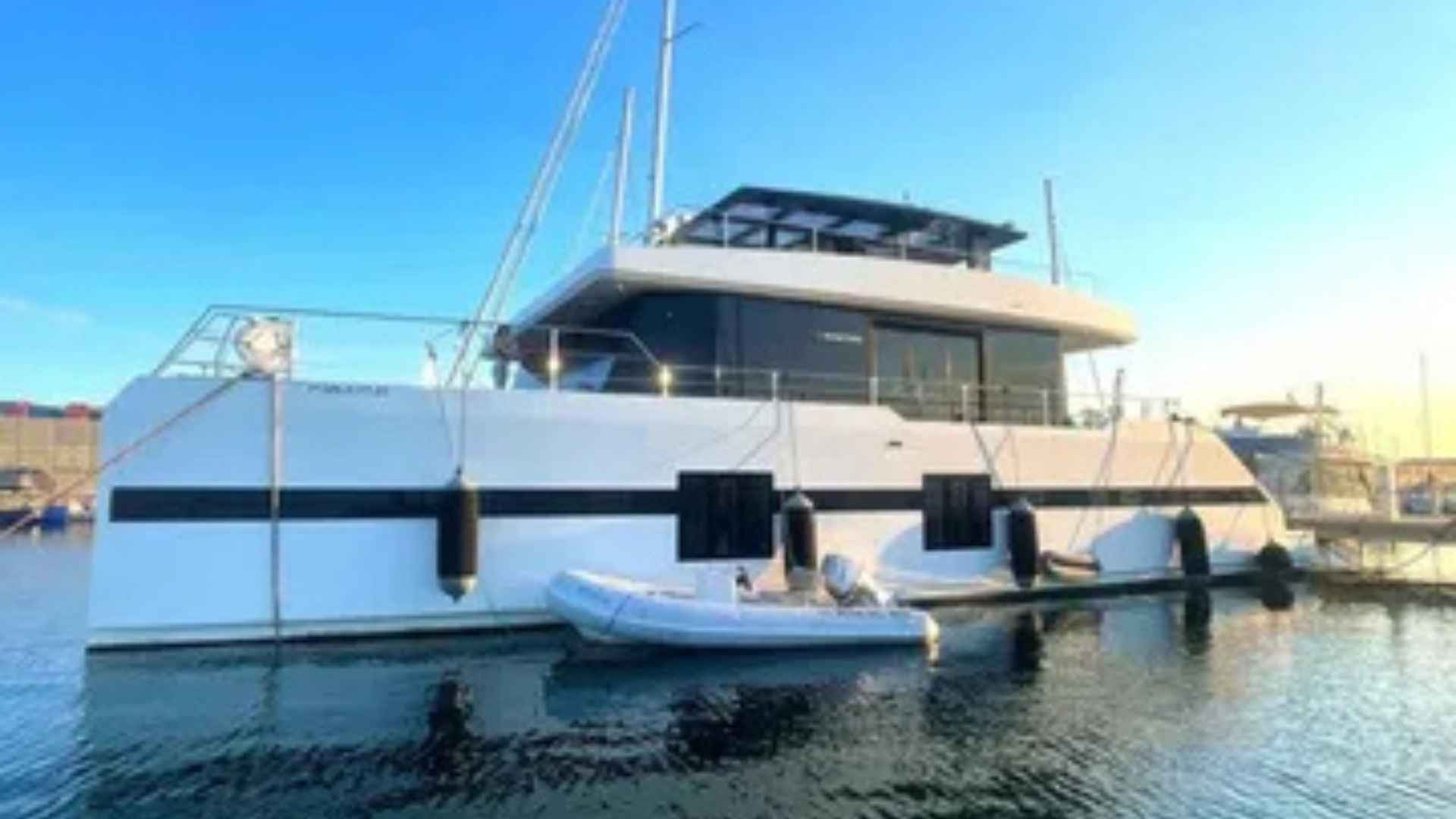
Sunreef Supreme 68 for sale 2017
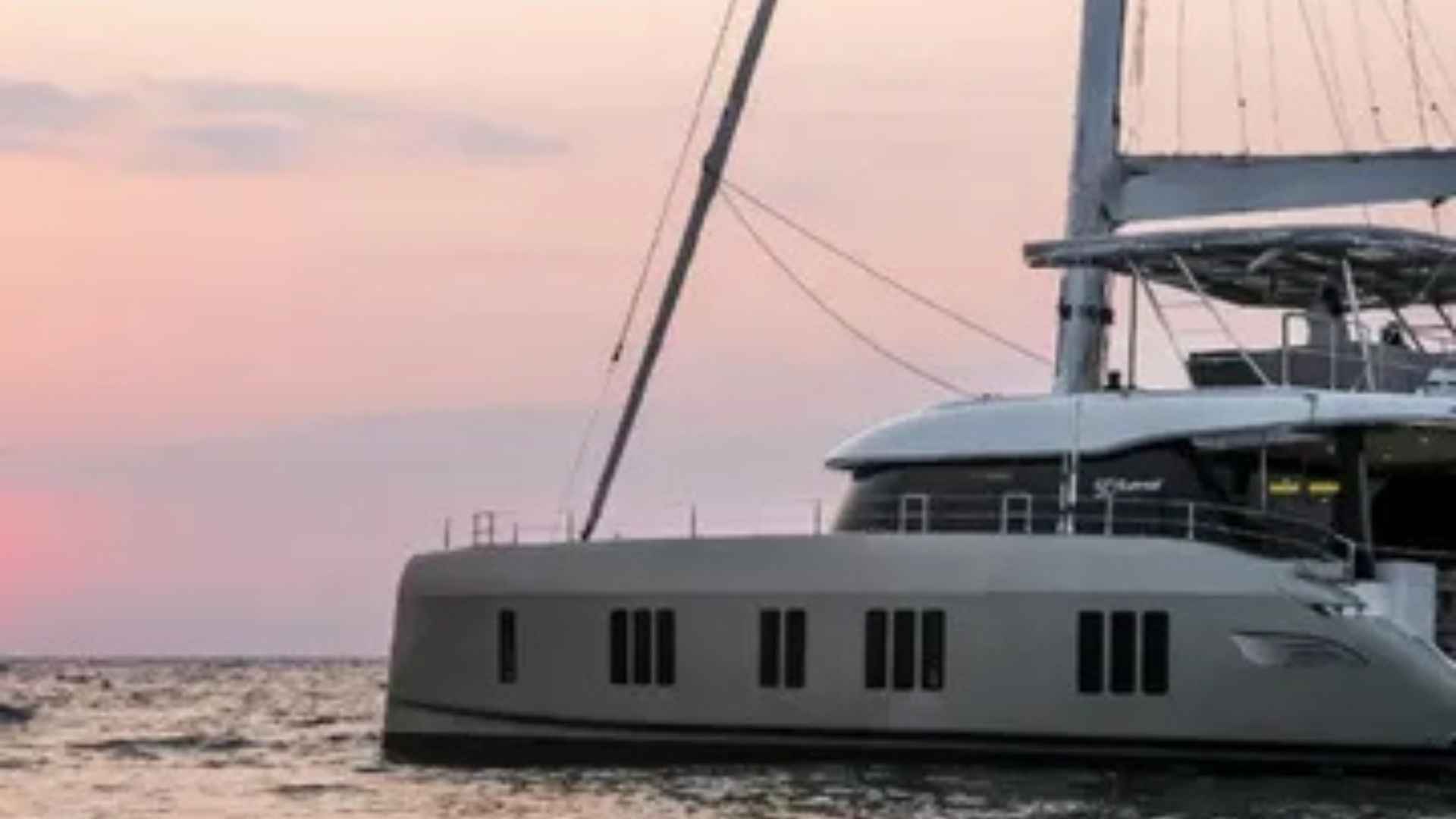
Sunreef 50 for sale 2019
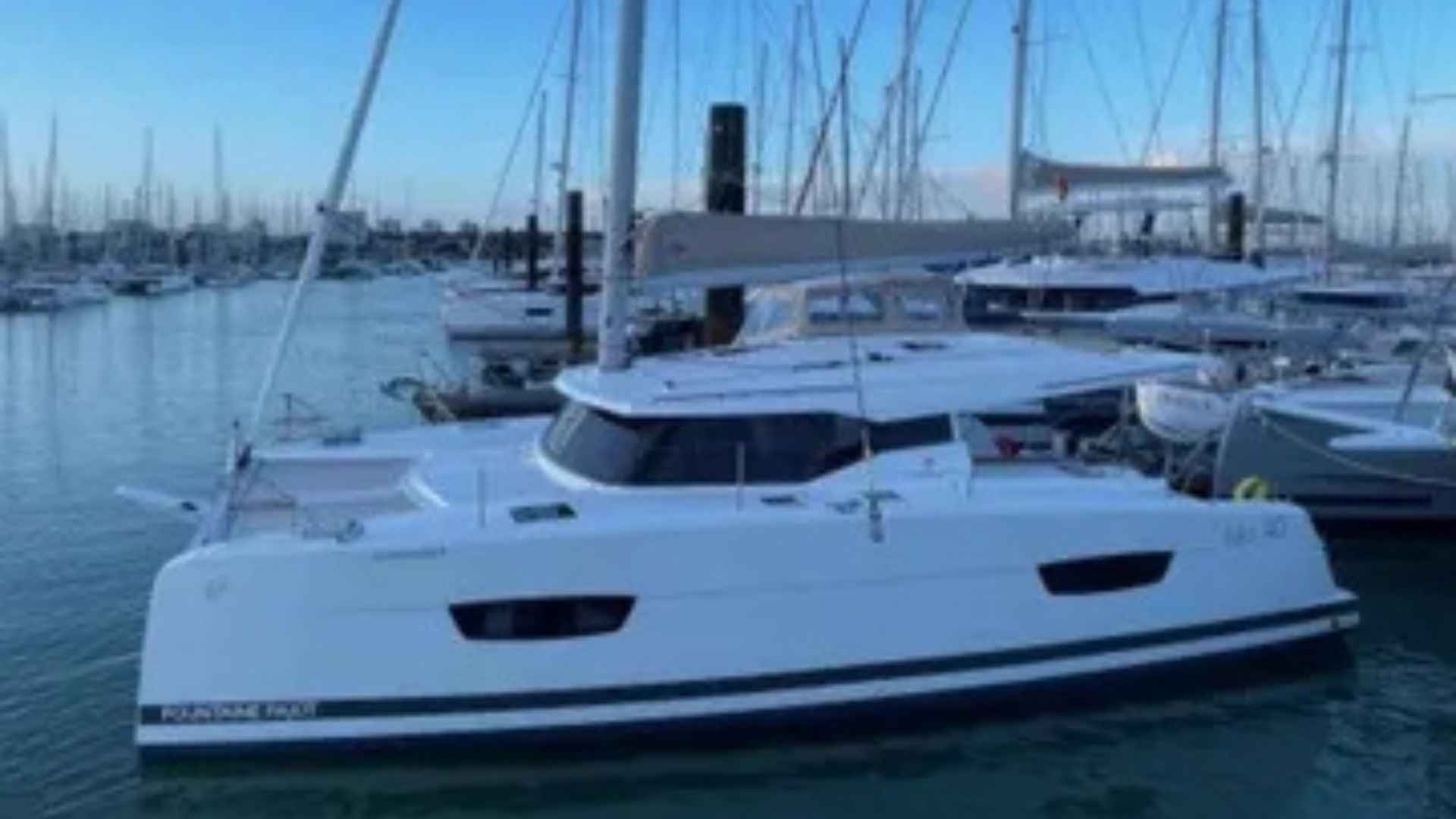
Fountaine Pajot Isla 40 for sale 2024
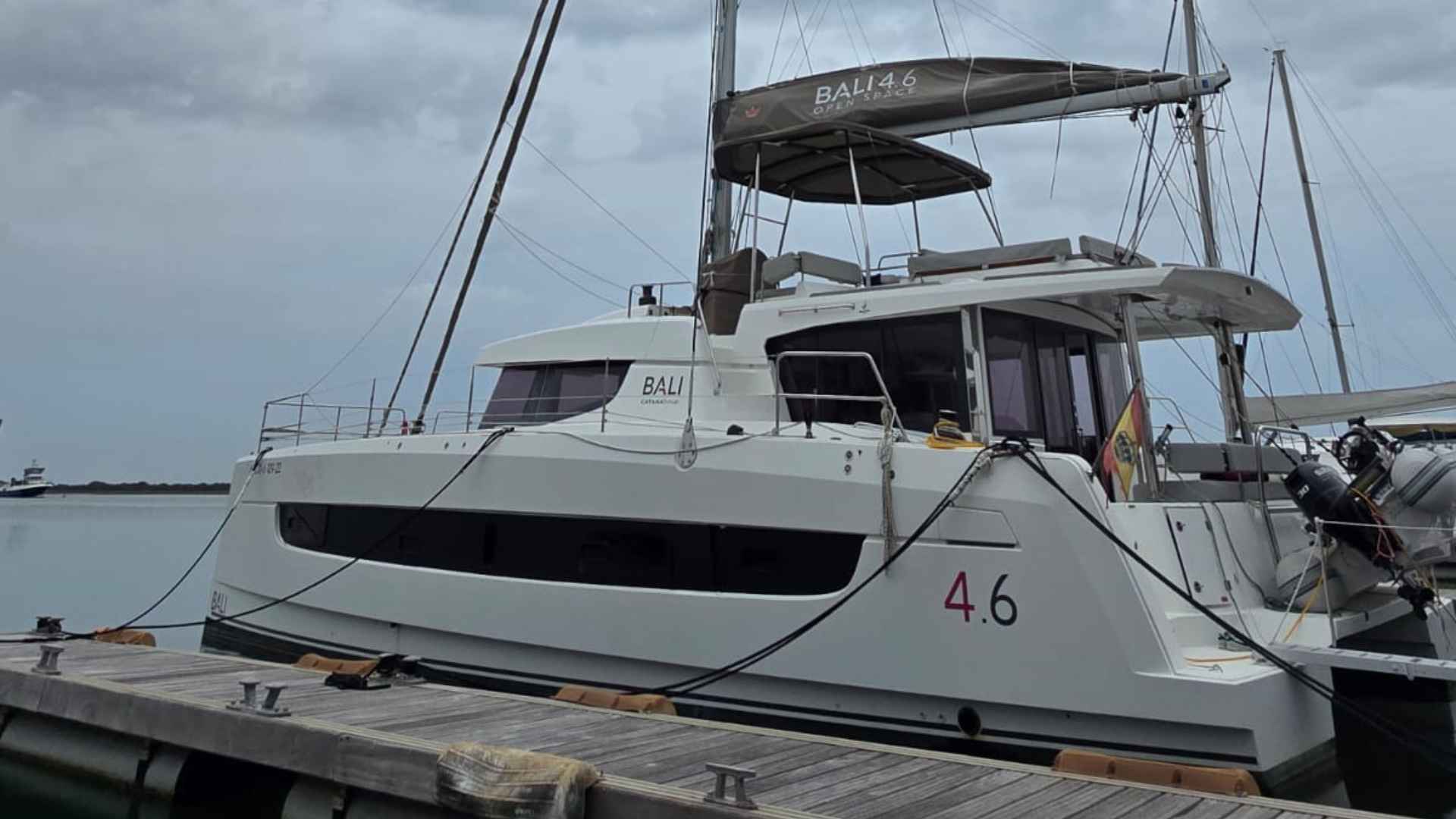
Bali 4.6 for sale 2022 (Mallorca)
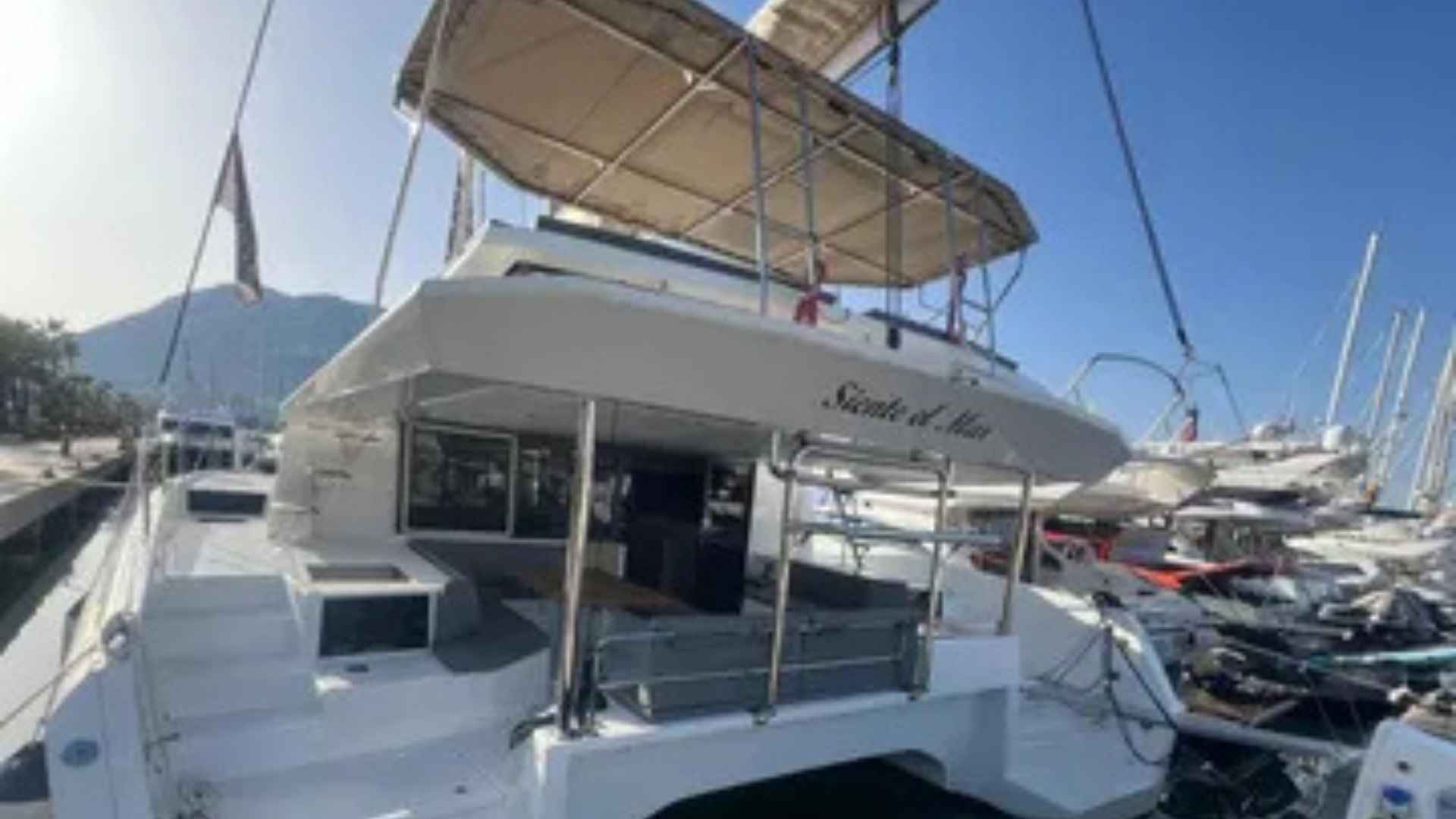
Dufour Catamarans 48 for sale 2024
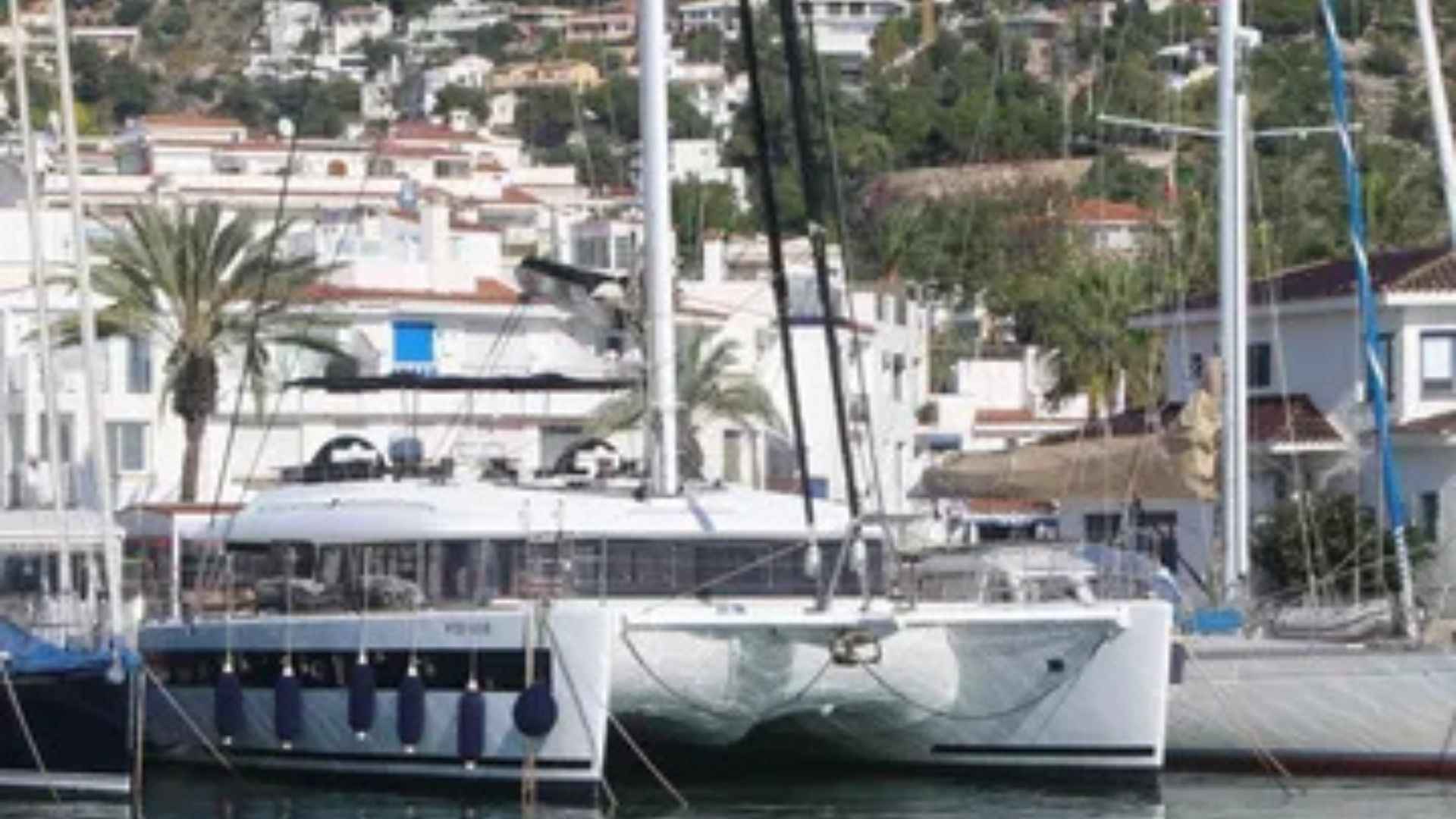
Lagoon 620 for sale 2012
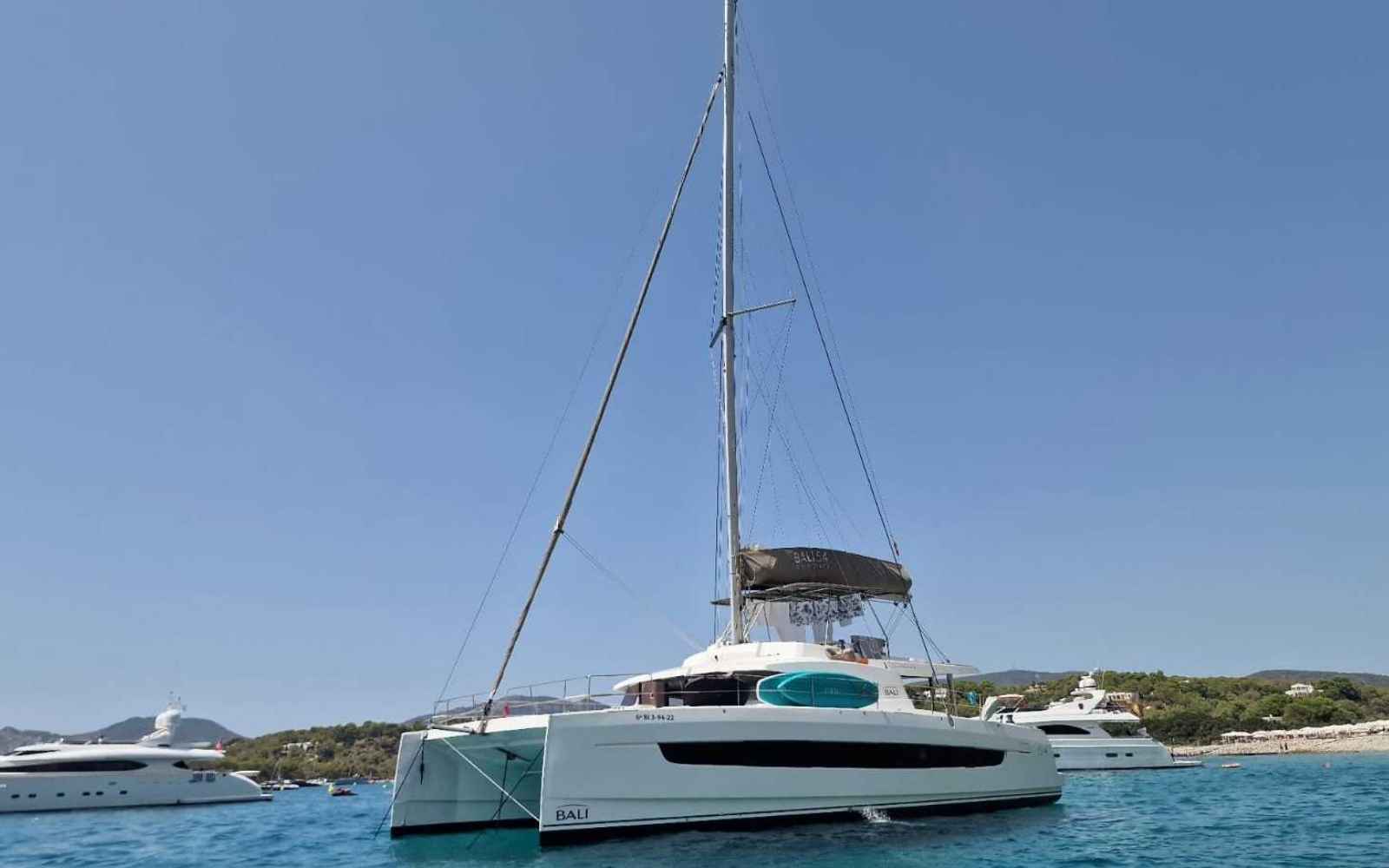
Bali 5.4 Open Space for sale 2022
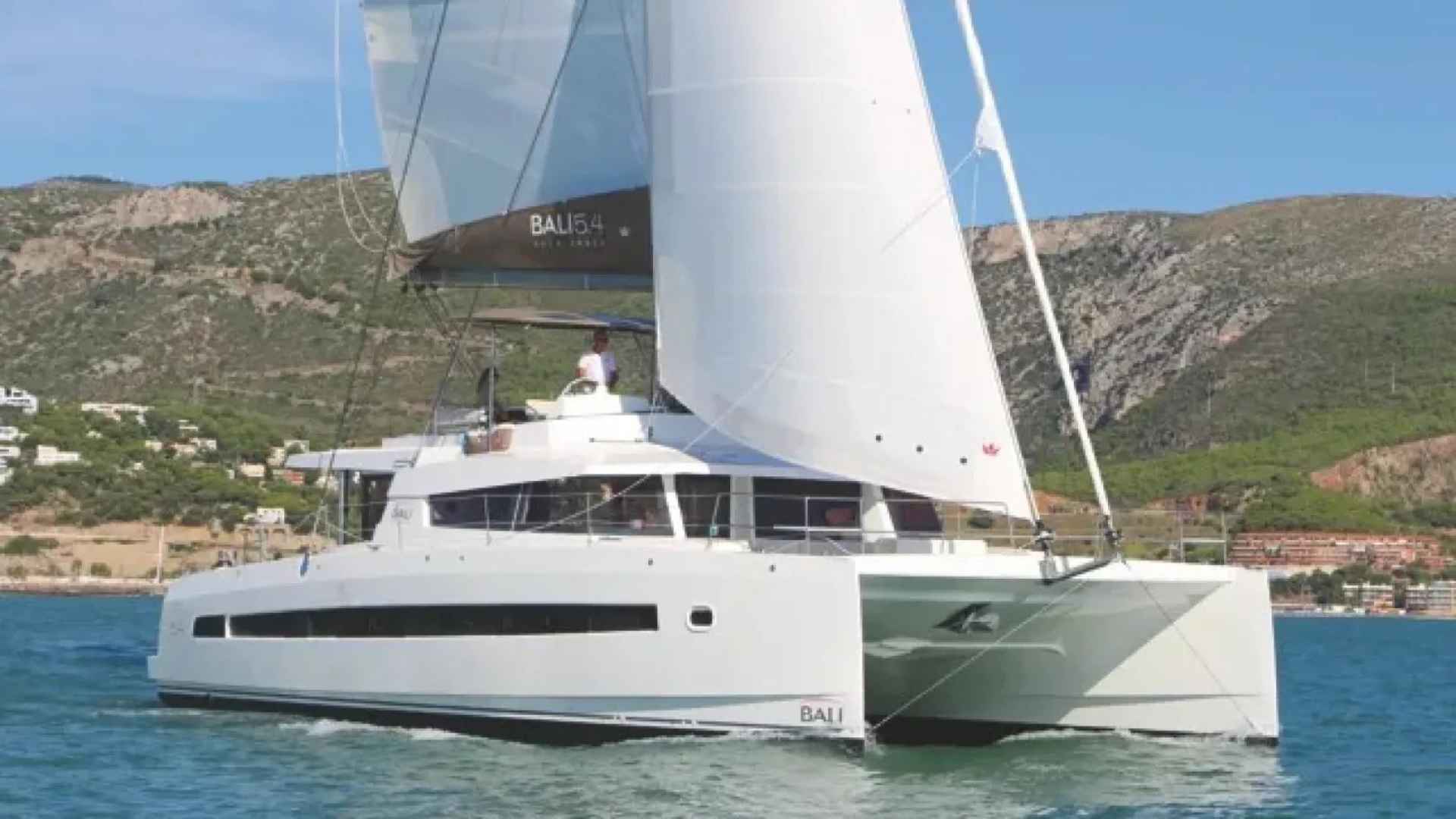
Bali 5.4 for sale 2021
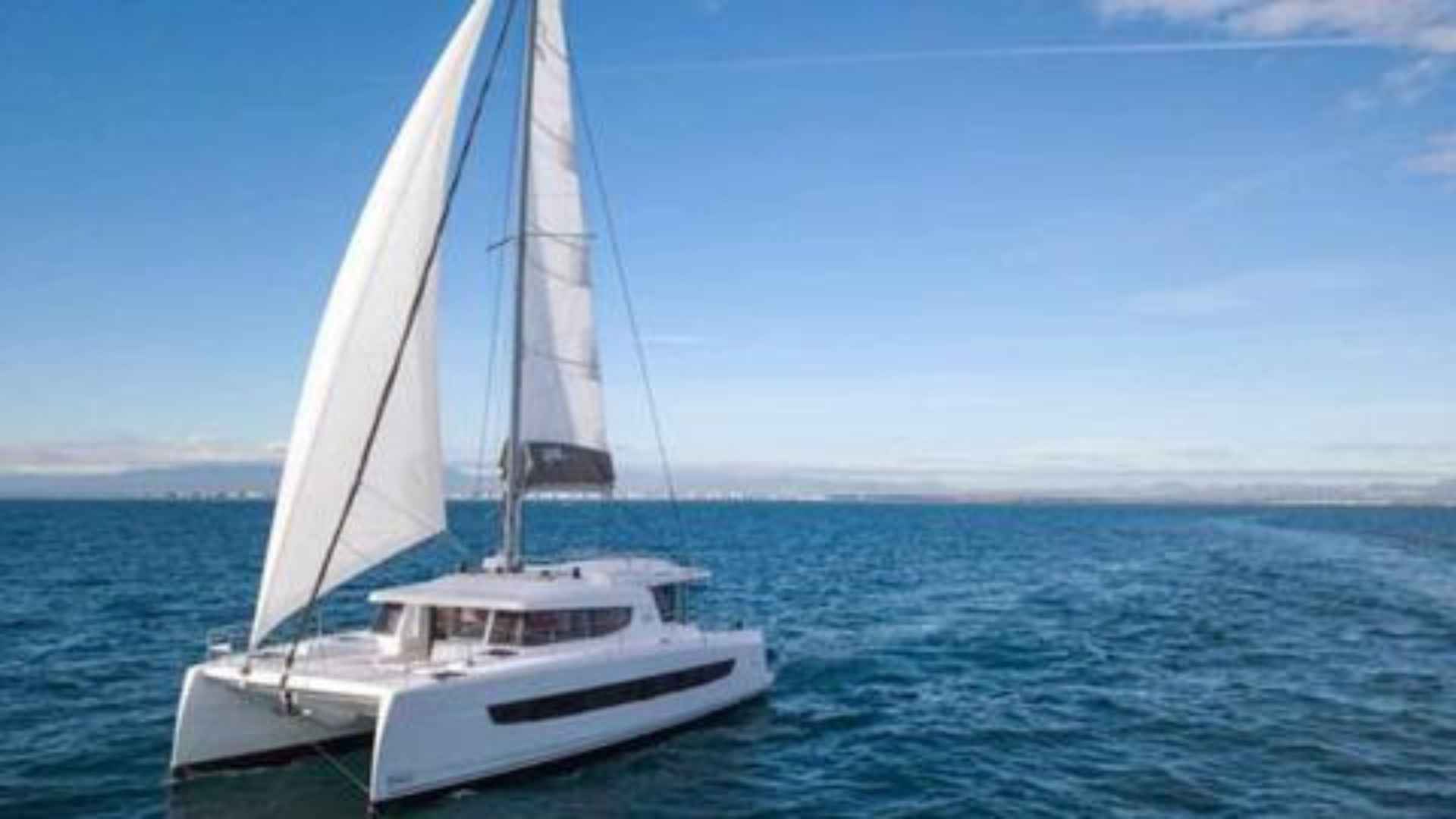
Bali 4.8 for sale 2020
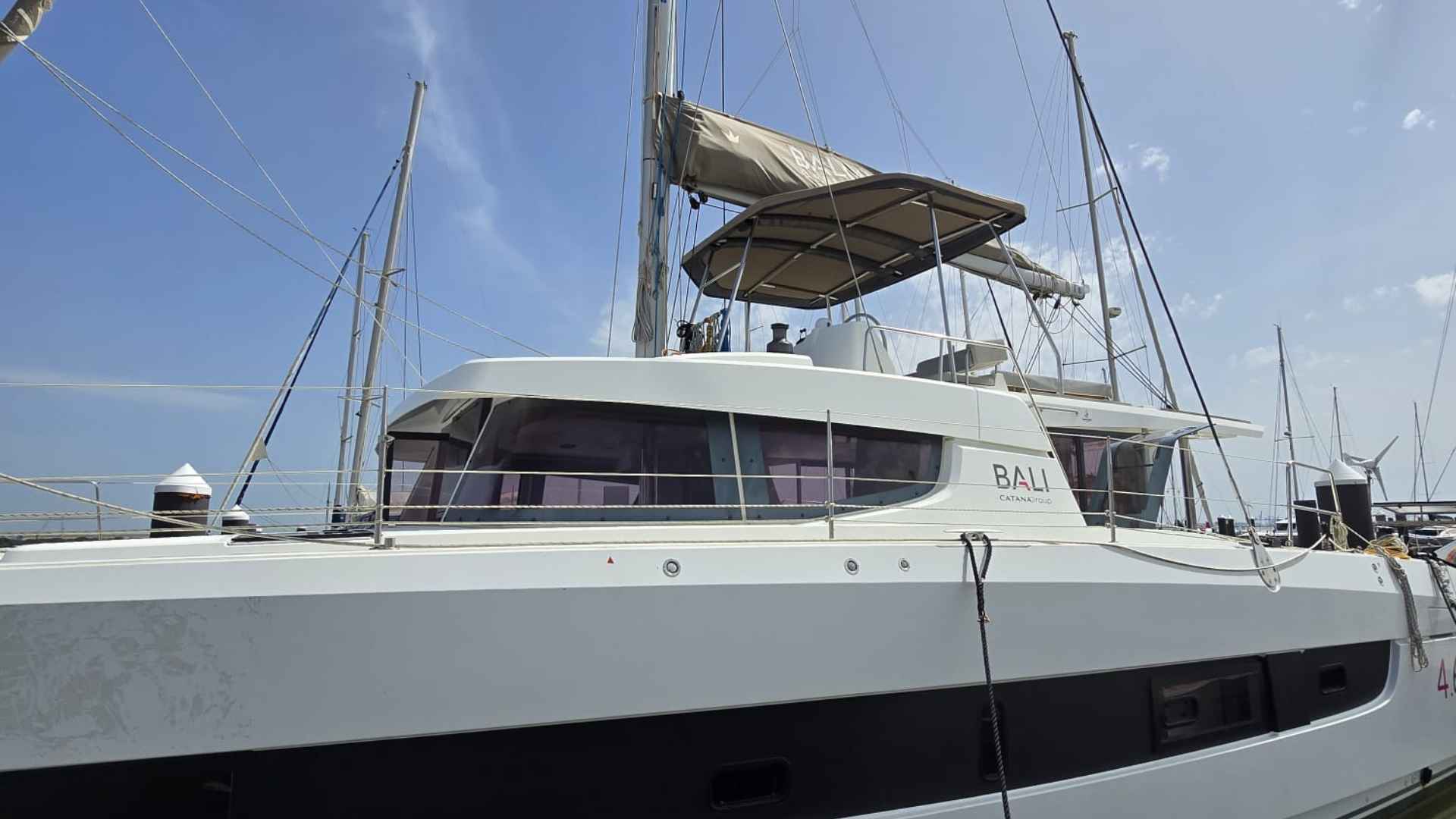
Bali 4.6 for sale 2022 (Barcelona)
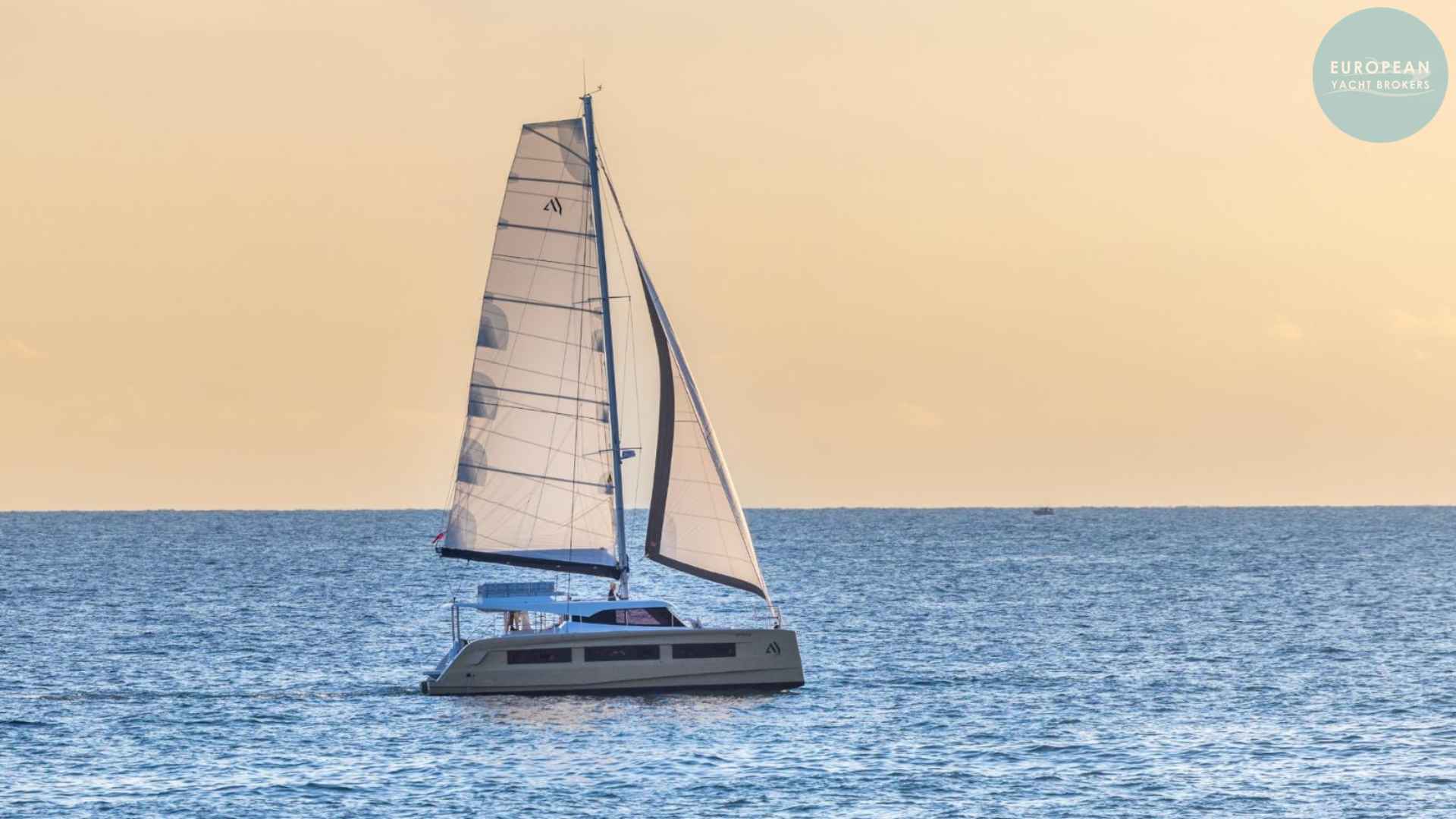
NEW Aventura 45 for sale 2024
Neel 51 for sale 2023
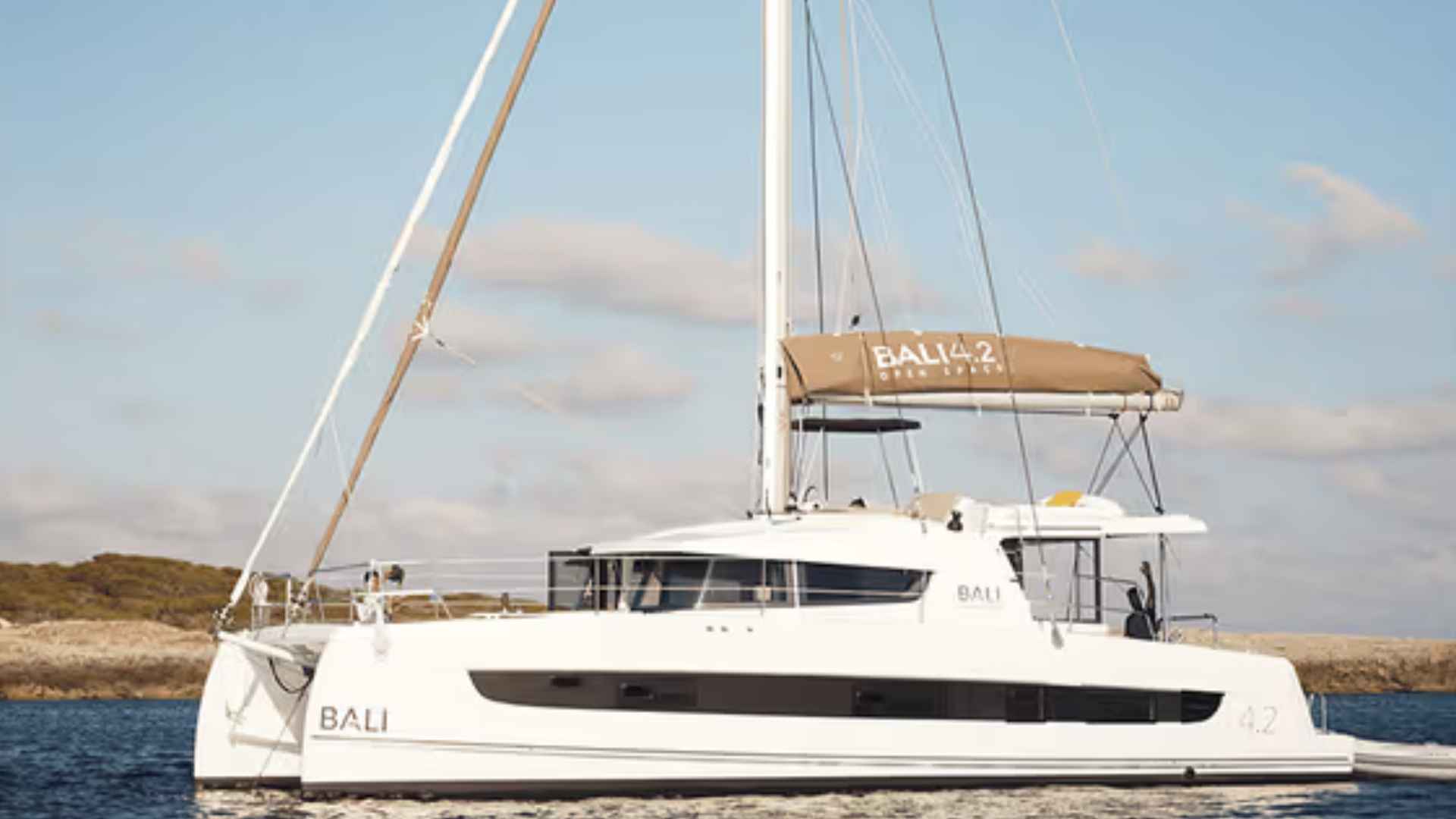
Bali 4.2 for sale 2025
Bali 4.4 for sale 2025 (Valencia)
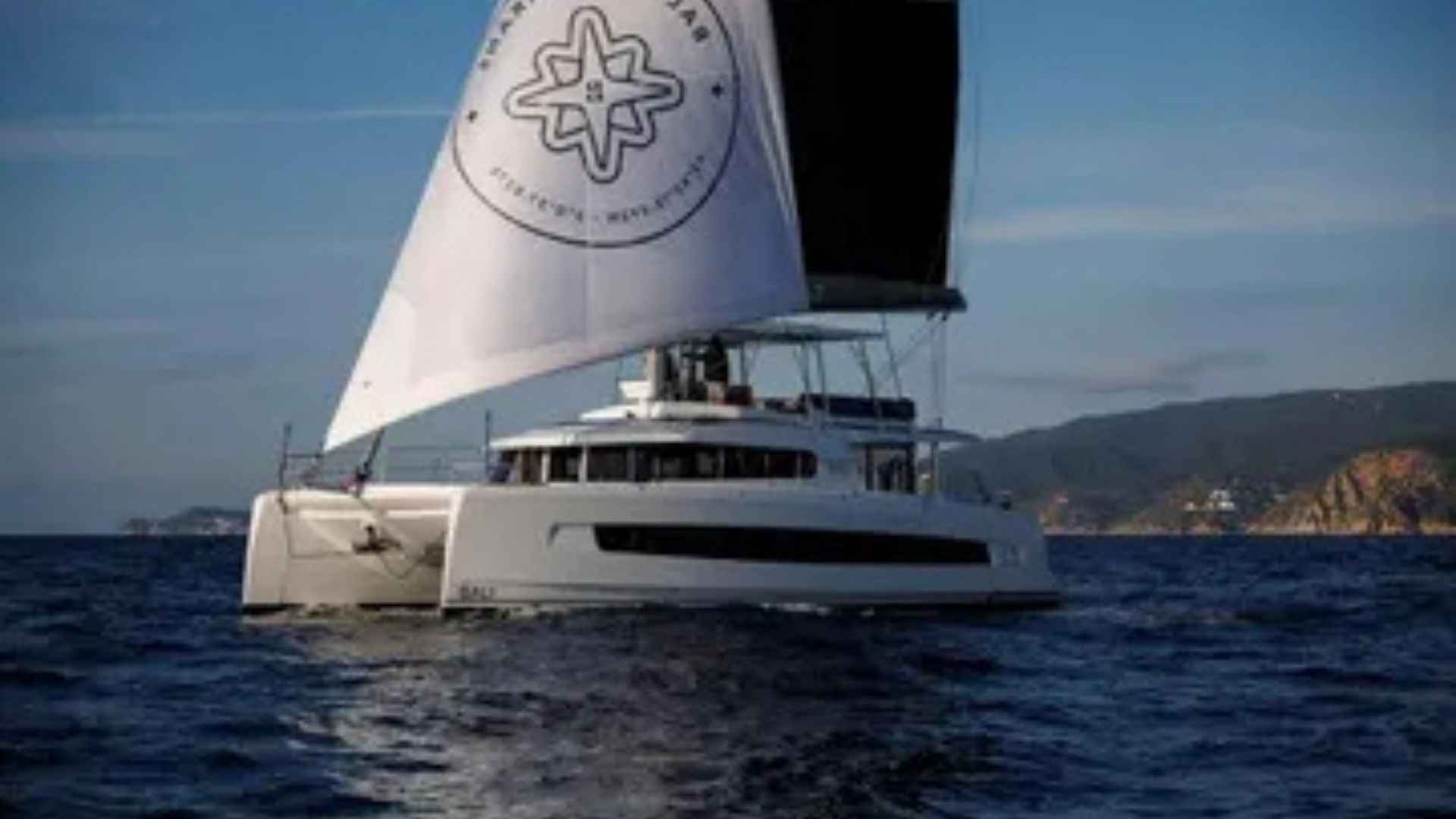
Bali 5.2 for sale 2025
Bali 5.8 for sale 2025
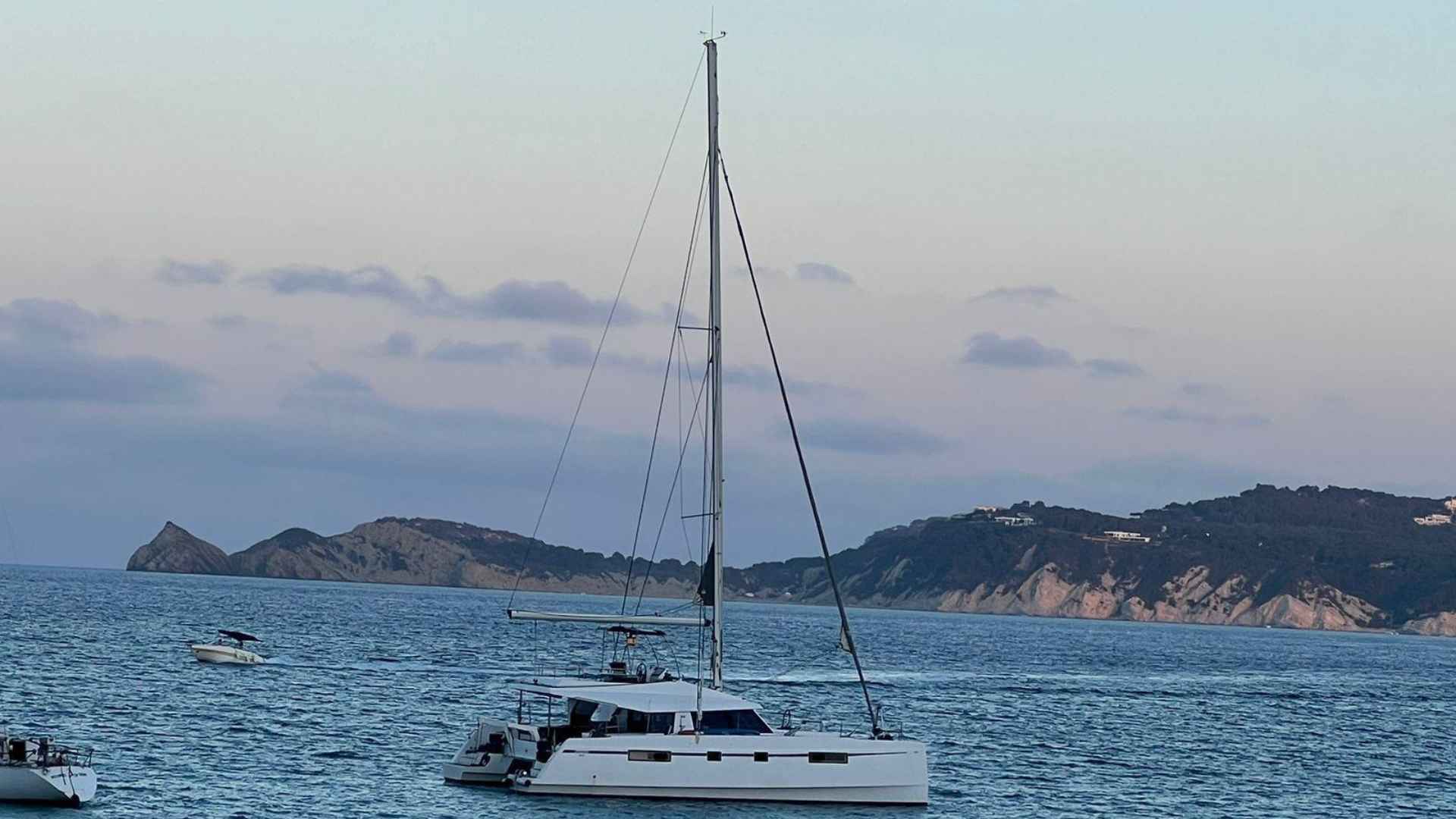
Bavaria Nautitech 46 Fly for sale 2017
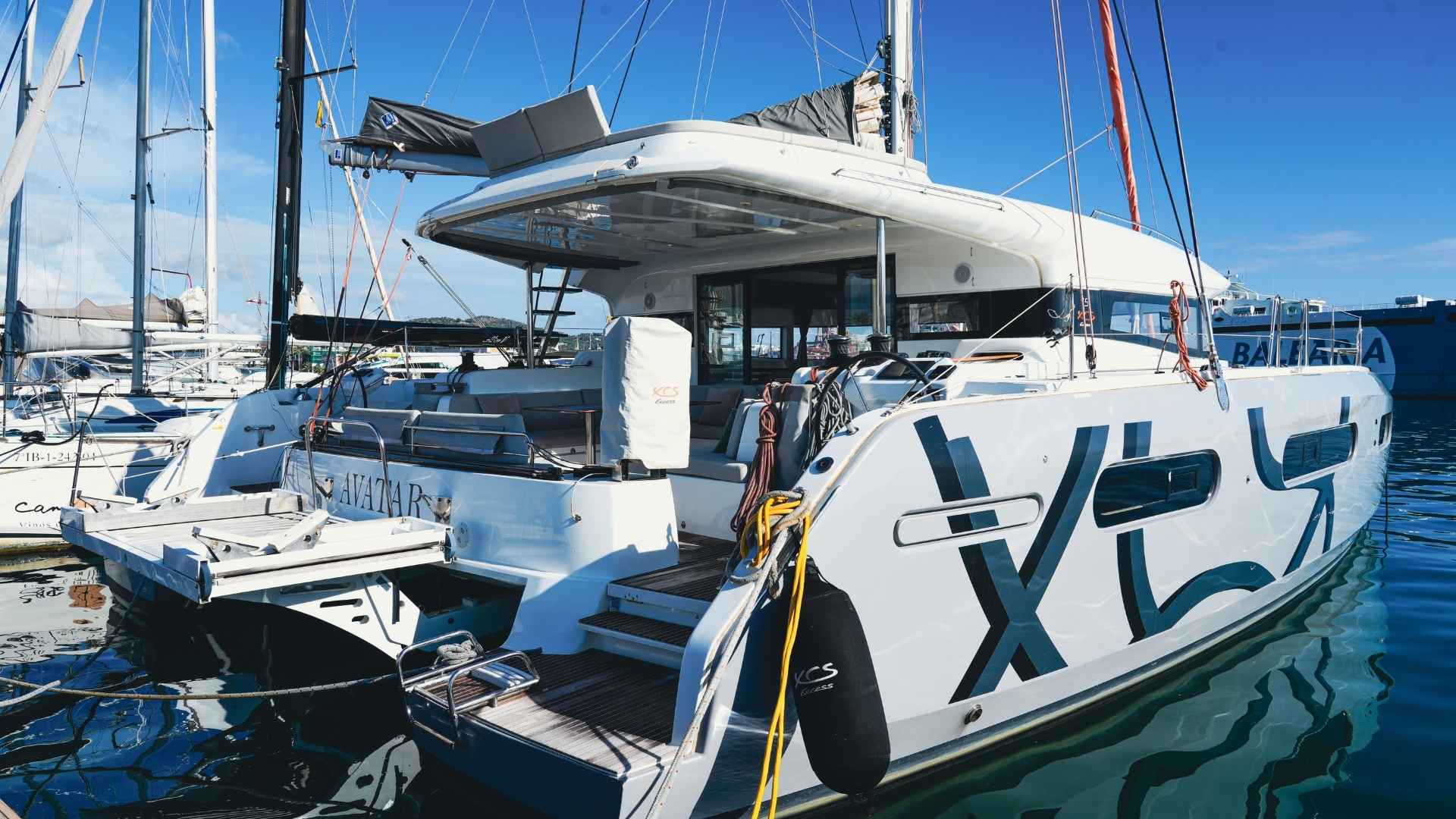
Excess 15 for sale 2022
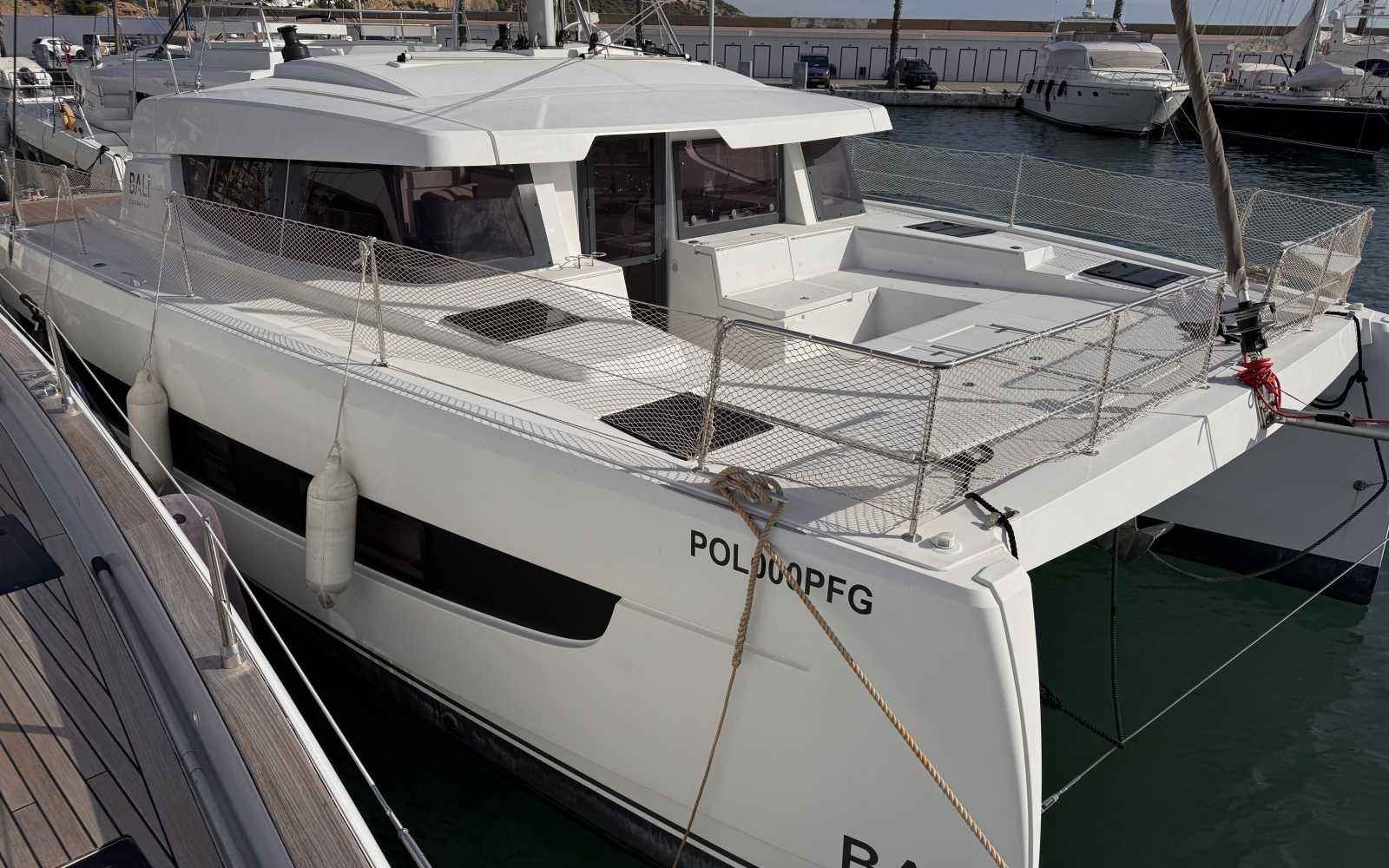
Bali 4.4 for sale 2022 (Sitges)
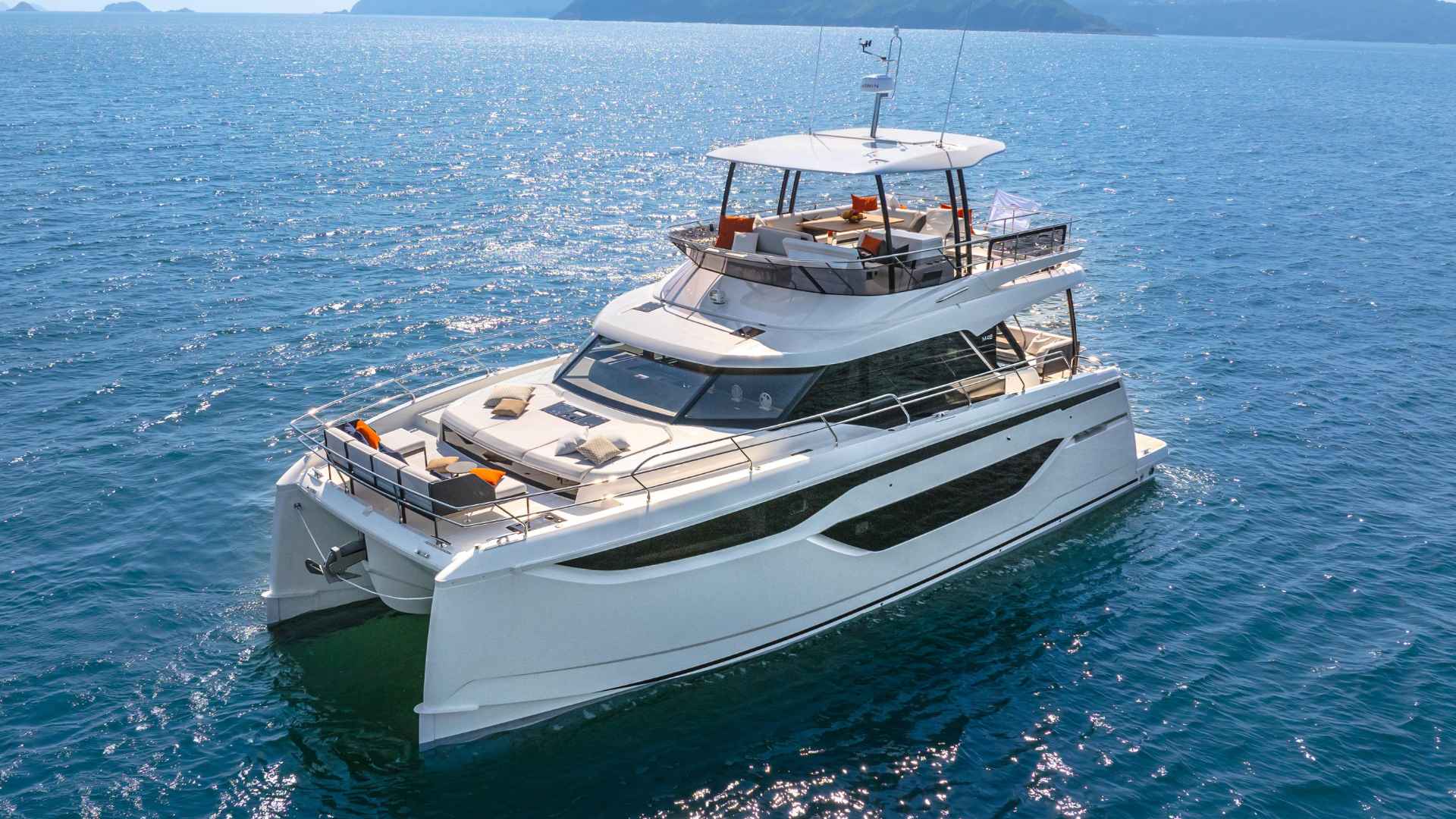
Prestige M48 for sale 2024
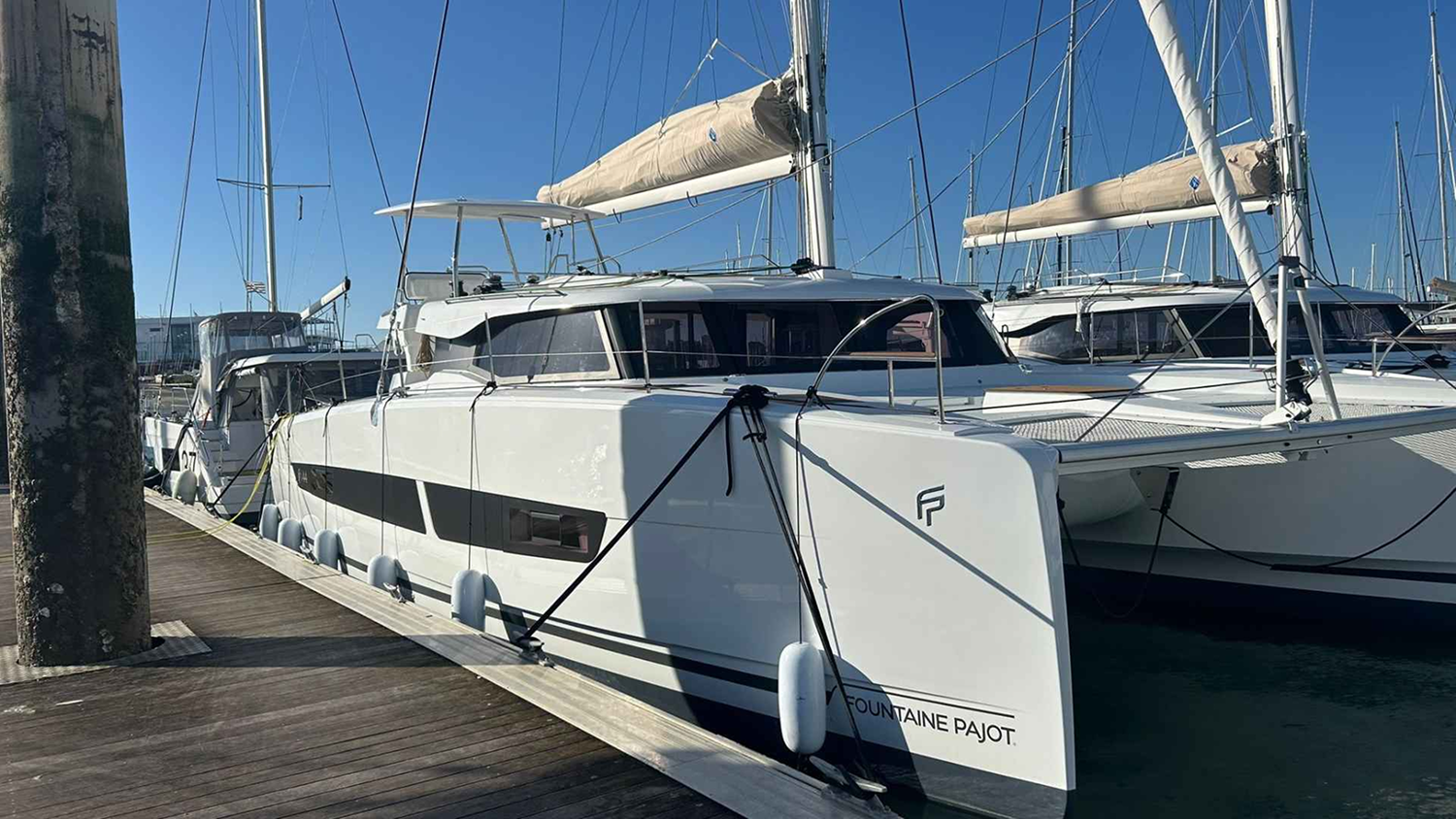
NEW Fountaine Pajot 44 for sale 2026
Top catamaran brands currently for sale in Spain.
Where to view catamarans for sale across Spain.
The bulk of Spanish catamaran inventory sits in the Balearics — Palma de Mallorca alone holds the highest concentration of listed catamarans of any single port in the Mediterranean. Mainland clusters in Valencia, Barcelona, and the Costa del Sol offer better viewing logistics for buyers flying in from northern Europe and stronger negotiation leverage given the smaller local buyer pool.
What to look for when buying a catamaran in Spain.
Charter history
A meaningful share of Spanish catamaran inventory is ex-charter. This isn't disqualifying, but the survey priorities shift: engine hours (often 4,000+), sail age, rig condition, and interior wear deserve disproportionate attention. A 4-cabin layout signals charter origin even when the broker doesn't mention it.
VAT and T2L documentation
Demand a valid T2L or equivalent VAT-paid certificate before signing anything. No T2L means a 21 percent contingent liability — either grounds to walk, or grounds to renegotiate the price by 15 to 25 percent. The Spanish market has more T2L issues than any other Mediterranean country.
Survey on the hard
Catamarans must be surveyed out of the water. Saildrives, rudder bearings, hull integrity at the bridge deck, and any history of grounding all need direct inspection. Budget €1,800 to €3,500 for a full catamaran survey in Spain, plus haul-out fees of €500 to €1,200.
Berth availability
Catamaran berths in Mallorca, Ibiza, and Barcelona are scarce and expensive. Confirm onward berth before closing — discovering you have nowhere to keep the boat after purchase is a real and common problem. A wide-beam berth can cost 60 to 100 percent more than a monohull berth of equivalent length.
Engine and saildrive service history
Two engines, two saildrives, two of everything. Service records should show major service intervals (Yanmar 3YM30 / 4JH series typically every 1,000 hours), saildrive seal replacement every 5 to 7 years, and recent fuel polishing. Missing records on a 10-year-old catamaran usually means €5,000 to €15,000 of catch-up work.
Use a buyer's broker
In Spain, buyer's brokers are typically paid via co-brokerage from the listing broker's commission — costing the buyer nothing extra. Their job is to represent your interests, shortlist sensibly, negotiate on your behalf, and coordinate the survey and closing. On a €500k catamaran, this is the highest-leverage decision you'll make.
More on buying yachts in Spain.
Catamarans for sale in Spain — frequently asked questions.
How much does a catamaran cost in Spain?
Used cruising catamarans in Spain typically range from €180k for an older 38-foot Lagoon or Fountaine Pajot, up to €800k for a recent 50-foot model, and €1.2M and above for new or near-new 55 to 65-foot catamarans. Charter-version catamarans (4-cabin layouts) trade at a 10 to 20 percent discount to owner-version (3-cabin) equivalents. Power catamarans typically command a 15 to 25 percent premium over sailing equivalents of the same length.
Where in Spain are most catamarans sold?
Mallorca (especially Palma) is the largest catamaran market in Spain, followed by Ibiza, Barcelona, Valencia, and the Costa del Sol. The Balearics dominate because of charter fleet turnover — many ex-charter catamarans hit the resale market every winter. Mainland markets like Valencia and Barcelona offer better value but smaller selection.
Are charter catamarans worth buying?
Ex-charter catamarans can be excellent value if surveyed properly. They've been maintained on a professional schedule and typically come with a comprehensive equipment package. The trade-off is high engine hours, heavy interior wear, and a 4-cabin layout that's less liveaboard-friendly. Budget €15k to €40k for cosmetic refresh and deferred maintenance after purchase, and insist on a full survey including engine compression test and rig inspection.
What VAT considerations apply when buying a catamaran in Spain?
For used catamarans sold by a private seller, Transfer Tax (ITP) applies at 4 percent of the purchase price, paid by the buyer. For new catamarans or those sold by a VAT-registered business, 21 percent VAT applies. The seller must provide a valid T2L or equivalent VAT-paid certificate proving the catamaran's tax status — without this, the buyer either inherits the VAT liability or faces a renegotiated discount. Non-resident buyers should structure the transaction carefully with a Spanish maritime lawyer to avoid unintended VAT exposure. See our full VAT guide.
Lagoon vs Fountaine Pajot vs Bali — which is best?
Lagoon dominates by volume and offers the widest model range from 38 to 80 feet, with strong charter-market resale value. Fountaine Pajot competes directly with sharper sailing performance and a slightly more refined interior finish at similar price points. Bali (built by Catana) is the rising challenger — known for its solid foredeck and tilting helm-station door, which divides opinion but appeals to liveaboard buyers. For pure performance, Catana, Outremer, and HH Catamarans target a different buyer entirely. The right choice depends on use case: charter-ready production cat, performance cruiser, or expedition liveaboard.
Can a non-resident buy a catamaran in Spain?
Yes. Non-residents can buy catamarans located in Spain without restriction. The key considerations are flag choice (Spanish flag requires residency; alternative flags like Maltese, British, or Polish are common for non-resident buyers), VAT status at point of sale, and whether the catamaran will remain in Spain long-term, which may trigger Temporary Admission rules. A Spanish maritime lawyer should structure the transaction.
How long does buying a catamaran in Spain take?
Typically 6 to 10 weeks from accepted offer to closing. The timeline includes survey and sea trial (1 to 2 weeks), legal due diligence and contract drafting (2 to 3 weeks), payment and registration transfer (2 to 4 weeks), and any flag change paperwork (adds 2 to 6 weeks if applicable). Cash buyers without flag changes can close faster.
Ready to find your catamaran?
Browse the live inventory above, or talk directly to a vetted broker. No middlemen, no lead-generation pay-walls, no hidden fees. The brokers behind every listing are the people you'll actually deal with.