Lagoon 50 for sale.
The flagship 50-footer that replaced the Lagoon 52 — a 49-foot 2-inch family cruiser produced from 2018 to 2022. Refined finish, modern systems, and the practical sweet spot in Lagoon's family-cruiser range. Available in 3-cabin owner, 4-cabin charter, and 6-cabin extended charter layouts. Succeeded by the Lagoon 51 in 2024.
The Lagoon 50 — family cruiser sweet spot.
The Lagoon 50 entered production in 2018 as the replacement for the Lagoon 52, and was itself replaced by the Lagoon 51 in 2024. Designed by VPLP with interior styling by Nauta Design and Patrick le Quément, the 50 was conceived as Lagoon's flagship family-cruiser — bigger and more refined than the 46, but stopping short of the genuine luxury territory of the 60 and Sixty 5. The result is a catamaran that found a clear position in the market: the upper-mid-range Lagoon for families and serious cruisers.
The 50's production window was deliberately short — just five model years — which has practical implications for buyers today. Used 50s are meaningfully younger and less charter-worn on average than 450s of similar pricing tier. Most 50s in the resale market are 4 to 8 years old, with established but not exhausted systems. Charter-fleet exposure exists but represents a smaller proportion of resale inventory than the 450 or 52 — Lagoon 50s tend to skew toward private-owner buyers from the start.
For buyers, the 50 sits in a clear position: genuine family-cruiser accommodation with manageable handling and maintenance. The owner-version layout offers a substantially larger owner suite than the 46 — walk-in shower, separate dressing area, dedicated workspace, and significantly more storage. The 50 has the tankage and refrigeration for extended cruising and Atlantic passages. It can still be handled short-handed by an experienced couple, though docking and berth fees scale up meaningfully versus a 46. For buyers wanting the next step beyond the 46 without committing to a 60-footer, the 50 is the obvious choice.
Lagoon 50 specs and dimensions.
Dimensions
- Length overall (LOA)
- 49'2" / 14.99 m
- Length waterline (LWL)
- 47'0" / 14.32 m
- Beam
- 27'7" / 8.41 m
- Draft
- 4'7" / 1.40 m
- Air draft (mast top)
- 83'0" / 25.30 m
- Light displacement
- 40,344 lb / 18,300 kg
Sails & rig
- Mainsail
- 1,131 sq ft / 105 m²
- Genoa
- 614 sq ft / 57 m²
- Total sail area
- 1,744 sq ft / 162 m²
- Optional code 0
- 1,237 sq ft / 115 m²
- Optional gennaker
- 1,938 sq ft / 180 m²
Engines
- Standard engines
- 2 × Yanmar 4JH80 (80 hp)
- Optional upgrade
- 2 × Yanmar 4JH110 (110 hp)
- Saildrives
- Yanmar SD60-4
- Cruising speed
- 8 to 9 knots under power
- Max speed (engines)
- ~10 knots
Tankage & capacity
- Fuel
- 272 US gal / 1,030 L
- Fresh water
- 203 US gal / 770 L
- Holding tanks
- 2 × 26 US gal / 2 × 100 L
- Owner version berths
- 6 to 8 (3 cabins + saloon)
- Charter version berths
- 10 to 14 (4-6 cabins + saloon)
Specifications are manufacturer figures for a base specification Lagoon 50. Individual boats vary based on year, equipment, and owner modifications. Always verify against the specific boat's documentation during survey.
Owner, charter, or extended charter — which Lagoon 50?
Unlike the 46 and smaller Lagoons, the 50 offers three distinct layouts. The choice between them defines the boat for years and meaningfully affects price, resale, and use-case fit.
For families and couples
The starboard hull is dedicated to a single owner suite with king-size berth, walk-in shower, separate dressing area, dedicated workspace, and substantially more storage than the 46's owner version. The port hull contains two guest cabins with shared head. Total of 3 cabins, 2 heads. The dominant private-owner layout. Trades at a 15 to 20 percent premium over charter version on resale.
For mid-density charter
Both hulls split symmetrically into two cabins each, four heads. Sleeps up to 10 guests plus crew. The standard configuration in catamaran charter fleets — well-balanced layout with reasonable cabin sizes and good circulation. Designed for paying-charter operations or large families who frequently host guests.
Extended charter version (6-cabin): The 6-cabin variant adds two additional crew or guest cabins forward in each hull, accessed via dedicated entries from the foredeck. Total of 6 cabins, 6 heads, sleeping up to 14 in genuine cabins. This layout is rare on the resale market and almost exclusively used by high-density commercial charter operators in the Caribbean and Mediterranean. Unless you're running a charter business with a specific capacity requirement, the 6-cabin layout is not a private-owner choice.
Wider context on layout choice and resale implications: our charter version vs owner version guide.
Lagoon 50 prices by year and condition.
Indicative 2026 ranges for the Lagoon 50 across year, layout, and condition. Country of sale also affects pricing — Italian and French inventory typically lists 5 to 15 percent above Spanish, Greek, or Croatian equivalents.
New Lagoon 50s are no longer available — production ended in 2022 and the model was succeeded by the Lagoon 51 in 2024. For new-build alternatives in this length bracket, see the full Lagoon range. Pricing context: our complete catamaran prices guide.
Lagoon 50s for sale right now.
4 verified Lagoon 50s currently listed across the Mediterranean. Showing the 4 most recent.
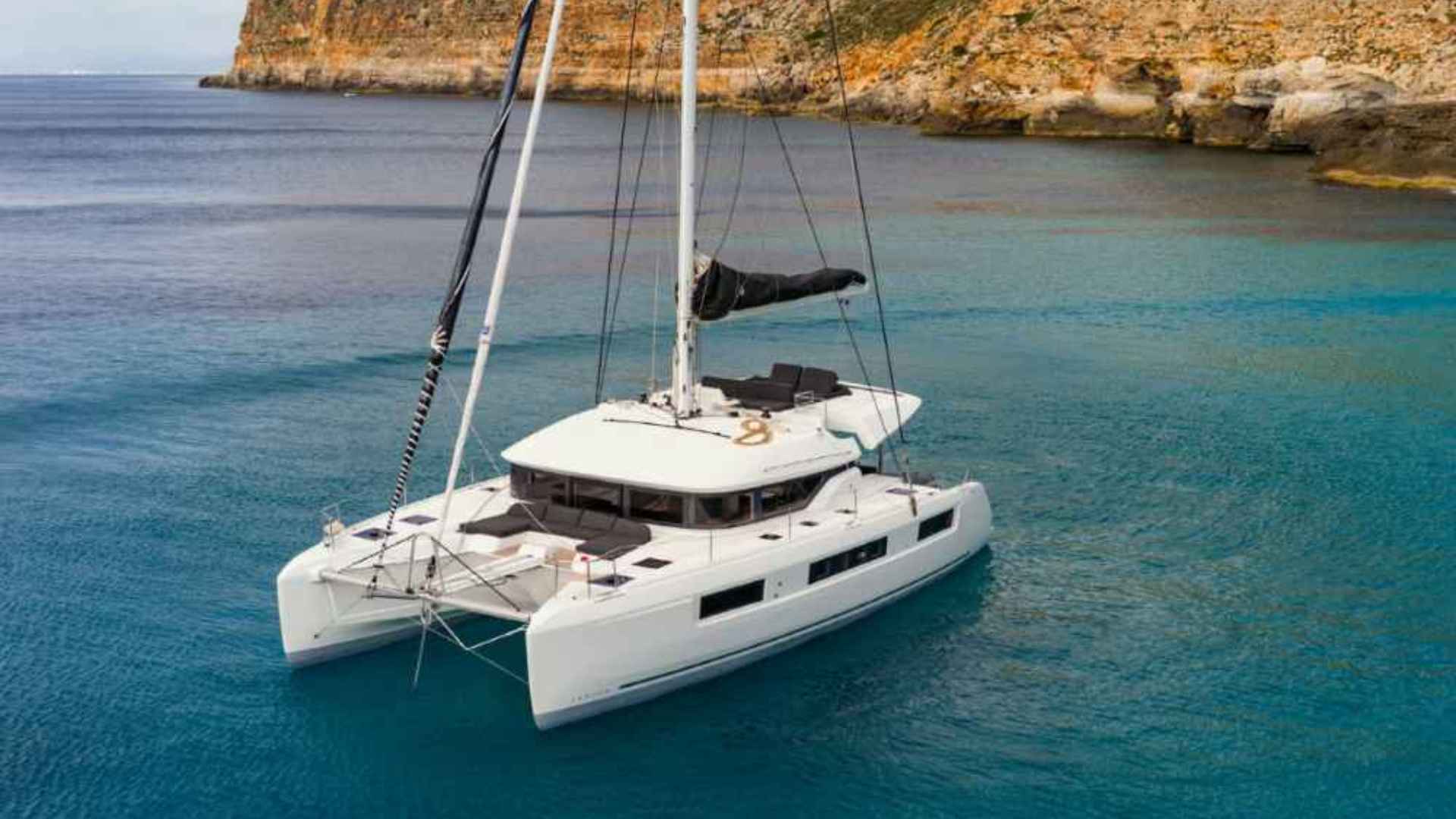
Lagoon 50 for sale 2022
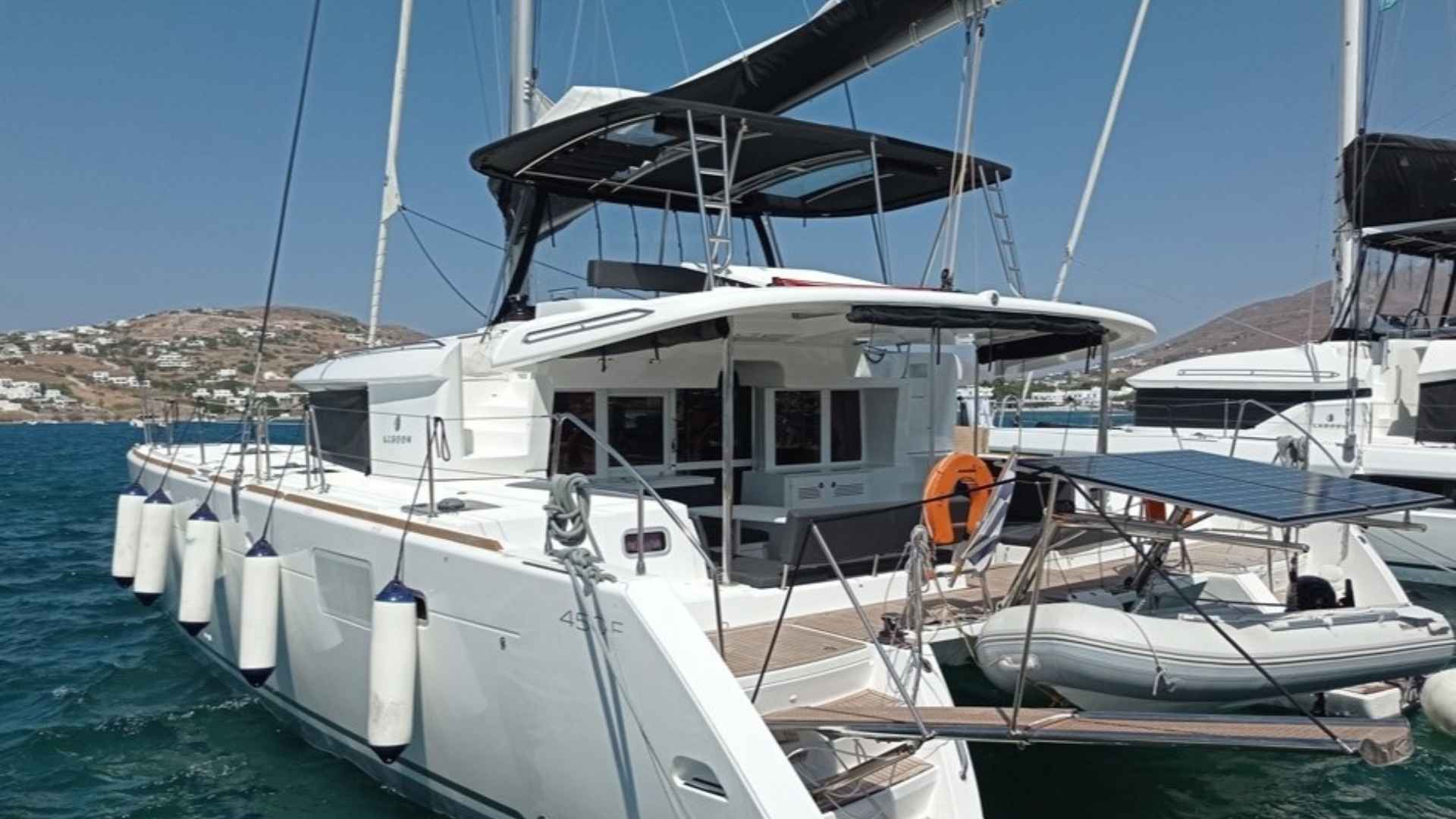
Lagoon 450 F for sale 2020
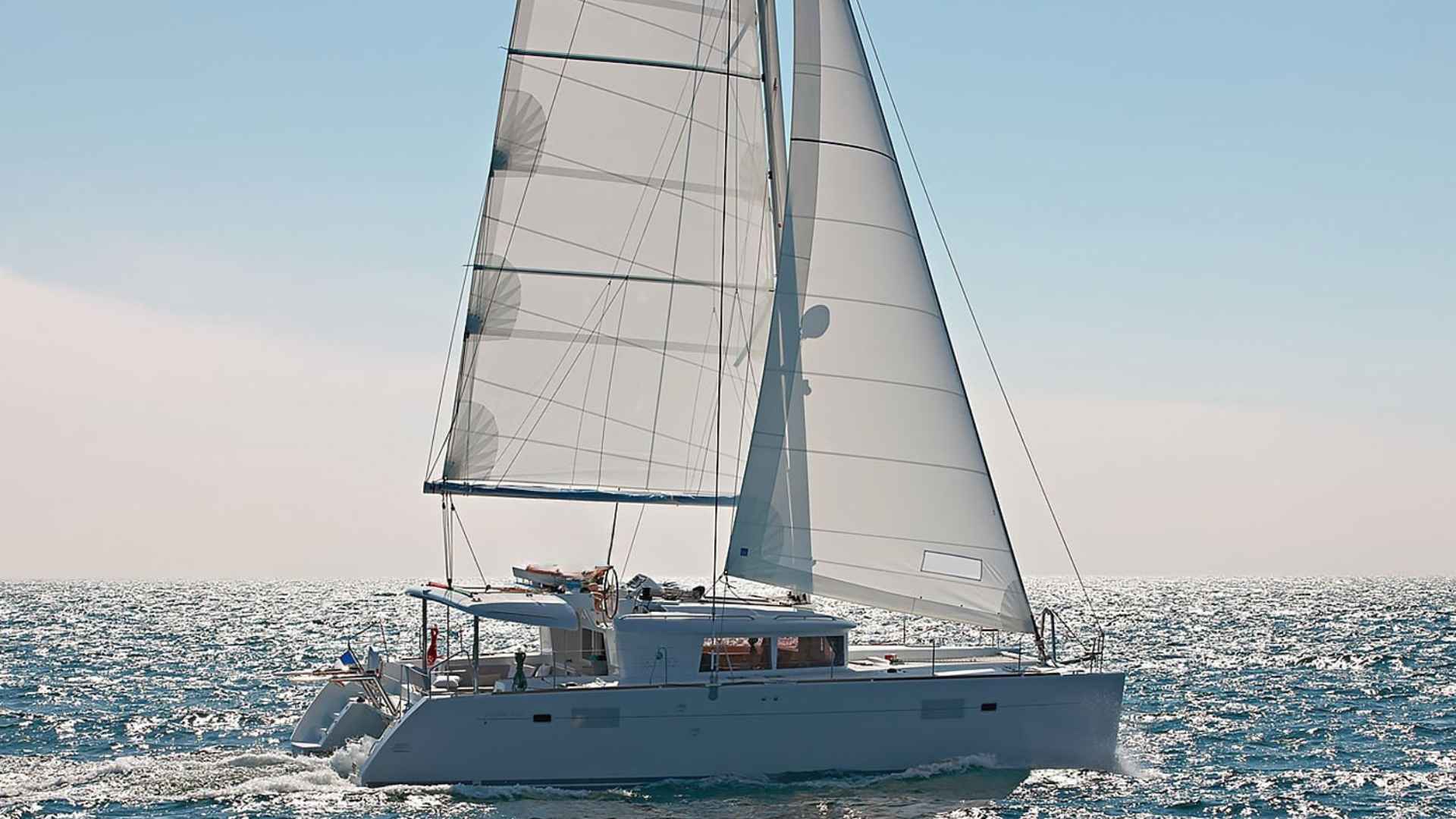
Lagoon 450F for sale 2018
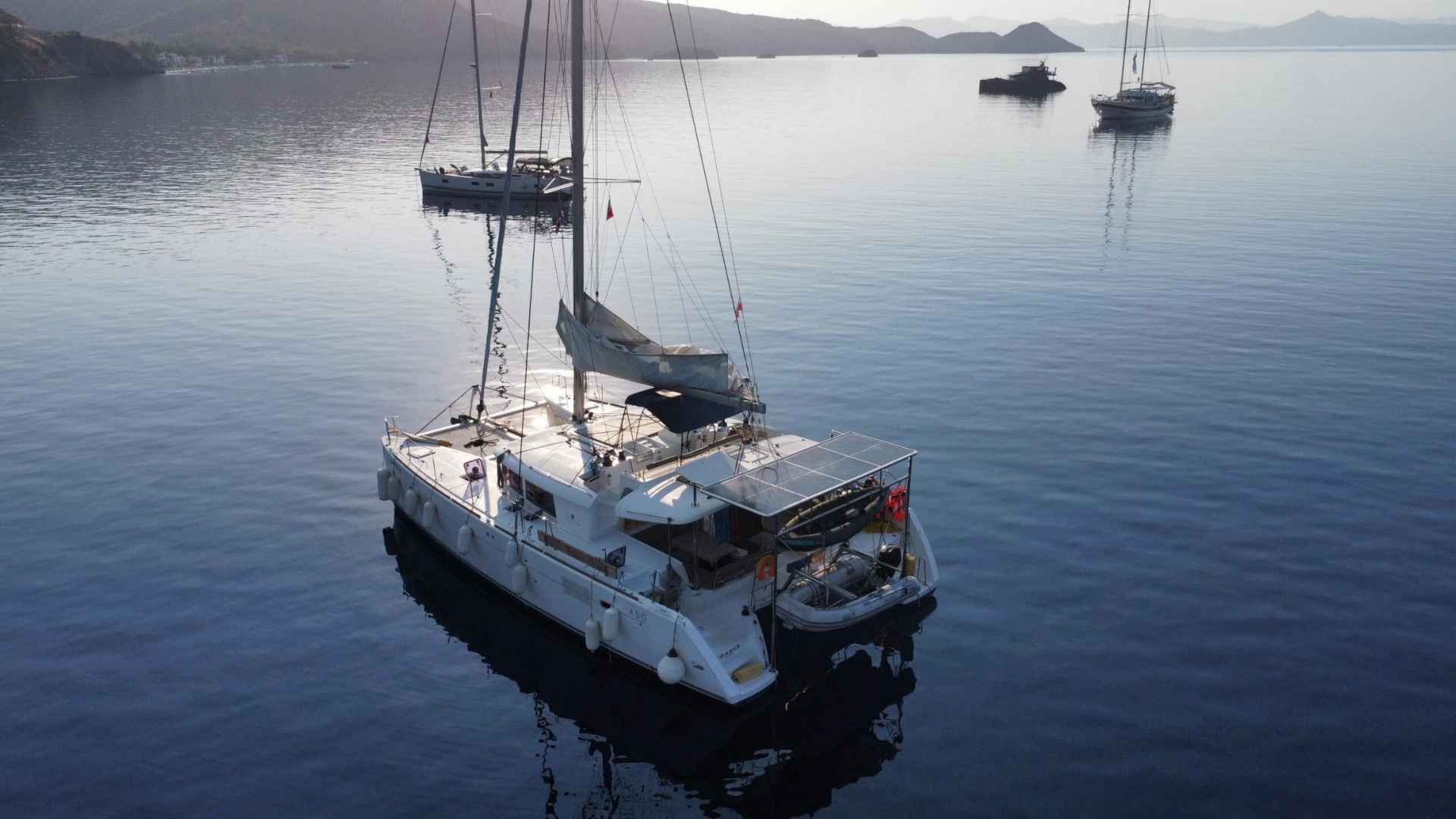
Lagoon 450F for sale 2015
What to inspect on a used Lagoon 50.
Engine hours and Yanmar service history
Charter-version 50s commonly show 3,000 to 5,000 hours by year 5; owner-version typically 800 to 1,800 hours over the same period. The Yanmar 4JH80 is a workhorse engine but service intervals matter — oil and filters at 250 hours, valve clearance at 1,000 hours, fuel injection inspection at 2,000 hours. Demand full Yanmar service records. On 4JH110-equipped boats, the larger engines often show lighter use as owners run them at lower load.
Saildrive seals and gear oil
Yanmar SD60-4 saildrives need seal and bellows replacement every 5 to 7 years. On any 2018-2019 Lagoon 50 still on original seals, this is now overdue and a near-certain €5,000 to €8,000 job per side. On 2020+ boats, original seals may still be serviceable but should be inspected and the gear oil checked for any milky appearance indicating saltwater intrusion.
Sails, rigging, and chainplates
Charter 50s commonly have replaced sails by year 4 to 5 — the boat's 105 m² mainsail and 57 m² genoa are not cheap to replace (€20,000 to €28,000 together). Standing rigging on 5+ year-old 50s should be inspected for surface corrosion and chainplate seal integrity. The 50's air draft of 25.3 m is meaningful — verify mast and rigging history with any marine yard work over the years.
Generator and house systems
Most Lagoon 50s come factory-equipped with a generator (Onan, Fischer Panda, or Mastervolt). Charter 50s commonly show 2,000 to 4,000 generator hours by year 5 — service records and oil analysis are essential. Watermaker (often Schenker, Spectra, or Dessalator) typically needs membrane replacement every 5 years at €2,000 to €3,500. Air conditioning compressors on charter boats frequently need refrigerant top-ups or full service. House system catch-up: €8,000 to €18,000 is typical on ex-charter inventory.
Electronics and integration
The 50 came factory-equipped with NMEA 2000 networking and integrated Raymarine or B&G electronics. Test every system live during sea trial — chartplotters, autopilot, AIS, radar, depth, wind, and any integrated cabin systems. Charter 50s frequently show degraded chartplotter screens, intermittent autopilot performance, and outdated charts. Comprehensive electronics refresh runs €10,000 to €25,000 — factor it in for ex-charter buys.
Cosmetic condition
The Lagoon 50's interior is more refined than the outgoing 52 but charter use produces meaningful wear by year 4-5. Upholstery, headliner, galley surfaces, and high-traffic flooring are typical wear points. Cosmetic refresh on an ex-charter 50 typically runs €15,000 to €30,000 depending on scope. Owner-version 50s typically need only minor refresh and often show meticulous maintenance from the original buyer.
Generic catamaran survey priorities apply equally: see our full catamaran survey checklist.
Lagoon 50s for sale across the Mediterranean.
Models often compared with the Lagoon 50.
Lagoon 50 — frequently asked questions.
How much does a Lagoon 50 cost?
Used Lagoon 50 prices typically range from €720k for an early 2018-2019 charter-version with high engine hours, up to €1.05M for a 2022 owner-version with low hours and full equipment. The bulk of the market sits at €800k to €950k for 2020-2021 boats. New examples are no longer available — Lagoon replaced the 50 with the Lagoon 51 in 2024.
How many cabins does the Lagoon 50 have?
The Lagoon 50 is offered in three layouts. The 3-cabin owner version dedicates the entire starboard hull to a single owner suite. The 4-cabin charter version splits both hulls into two cabins each with four heads. An extended 6-cabin charter version adds two additional crew or guest cabins, designed for high-density charter operations. Owner versions trade at a 15 to 20 percent premium on resale.
Is the Lagoon 50 a good catamaran for a family?
The Lagoon 50 is widely considered Lagoon's family-cruiser sweet spot. At just under 50 feet, it offers significantly more interior volume than the 46 — particularly in the saloon and owner suite — while remaining manageable to handle short-handed for couples with older children. The boat has the tankage, refrigeration, and sleeping capacity for genuine extended family cruising and Atlantic crossings.
What is the difference between the Lagoon 50 and Lagoon 52?
The Lagoon 50 (2018-2022) replaced the Lagoon 52 (2014-2018) as Lagoon's flagship 50-footer. The 50 is fractionally smaller at 49'2" versus the 52's 52'2", but offers refined interior layout, modernised systems, improved sailing performance, and a more contemporary aesthetic. The 52 is older and slightly larger but has lower per-foot pricing on the resale market.
Lagoon 50 vs Lagoon 51 — which should I buy?
The Lagoon 51 (2024-present) is the 50's direct successor. The 51 is current production with the latest specifications and modern electronics. The 50 (2018-2022) is now exclusively a used market — boats are 4 to 8 years old with established service histories, available immediately rather than on a 12 to 24-month new-build lead time, and at meaningfully lower price points (used 50 from €720k versus 51 new from €1.4M). For modern systems and the latest specification, the 51. For value and immediate availability, the 50.
Can a Lagoon 50 cross the Atlantic?
Yes — the Lagoon 50 is well-suited to Atlantic crossings. With substantial tankage (1,030 litres fuel, 770 litres fresh water standard), good sail wardrobe, and modern electronics, the 50 has the range and accommodation for comfortable transats. Many ARC participants choose the 50 specifically for family ocean cruising. Typical Atlantic crossing times are 16 to 21 days.
Ready to find your Lagoon 50?
Browse the live inventory above, or talk directly to a vetted broker. No middlemen, no lead-generation pay-walls.