Tanna 47 for sale.
Fountaine Pajot's mid-flagship sailing catamaran. Replaced the Saona 47 in 2021, with a flybridge lounge area roughly twice the size of its predecessor's. Positioned between the Elba 45 and Aura 51.
The Tanna 47 — mid-range cruiser.
The Tanna 47 entered production in 2021 as the direct replacement for the Saona 47 (2017–2021) in Fountaine Pajot's mid-flagship slot. The hull design was evolved rather than redrawn — Berret-Racoupeau retained the chined hulls that gave the Saona its performance edge — but the deck layout was substantially reworked.
The defining upgrade is the flybridge lounge. On the Saona 47, the elevated helm came with a small adjacent lounge area; on the Tanna 47, the flybridge is roughly twice the size and functions as a genuine second living space for cruising at anchor. Combined with the redesigned saloon (larger windows, panoramic glazing), the Tanna feels more like a 50-foot catamaran inside than a 47.
The Tanna 47 sits squarely between the Elba 45 (smaller, family-cruiser positioning) and the Aura 51 (larger, premium charter-fleet positioning). Most live inventory is on charter-fleet rotation — five-year programmes started in 2021–2022 are now beginning to come off, which is filling the Mediterranean used market with 2021–2023 hulls.
Tanna 47 specs and dimensions.
Dimensions
- Length overall (LOA)
- 47'4" / 14.43 m
- Length waterline (LWL)
- 46'5" / 14.15 m
- Beam
- 25'2" / 7.69 m
- Draft
- 4'5" / 1.35 m
- Air draft (mast top)
- 75'5" / 23.00 m
- Light displacement
- 33,290 lb / 15,100 kg
Sails & rig
- Mainsail
- 775 sq ft / 72 m²
- Genoa
- 527 sq ft / 49 m²
- Total sail area
- 1,302 sq ft / 121 m²
- Optional code 0
- 1,001 sq ft / 93 m²
- Designer
- Berret-Racoupeau
Engines
- Standard engines
- 2 × Volvo D2-50 (50 hp)
- Optional upgrade
- 2 × Volvo D2-60 (60 hp)
- Saildrives
- Volvo MS25L
- Cruising speed
- 7 to 8 knots under power
- Max speed (engines)
- ~9 knots
Tankage & capacity
- Fuel
- 185 US gal / 700 L
- Fresh water
- 159 US gal / 600 L
- Owner version berths
- 6 (3 cabins + saloon)
- Charter version berths
- 10 to 12 (5–6 cabins + saloon)
- Interior design
- Andrew Winch Designs
Specifications are manufacturer figures for a base specification Tanna 47. Individual boats vary based on year, equipment, and owner modifications. Always verify against the specific boat's documentation during survey.
Owner version vs charter version — which Tanna 47?
The Tanna 47 is offered in multiple layouts. Choosing between them is the most important decision in a Tanna 47 purchase, and meaningfully affects price, resale, and how the boat actually lives.
For owner-cruisers
The Maestro 3-cabin dedicates the starboard hull to a single owner suite with island queen berth, ensuite head with separate shower, and dedicated workspace. The Maestro 4-cabin keeps the owner suite but adds a fourth guest cabin on the port side. Best for couples and small families. Trades at a 12–18% premium to charter version.
For charter operations
The Quintet 5-cabin and Sextet 6-cabin layouts split both hulls symmetrically into multiple cabins, with five or six heads. Sleeps up to 12 guests plus crew. Designed for charter operations across the Mediterranean and Caribbean. The Sextet is the dominant layout in charter fleets and on the resale market.
Wider context on layout choice and resale implications: our charter version vs owner version guide.
Tanna 47 prices used and new in 2026.
Indicative 2026 ranges for the Tanna 47 across condition, year, and layout. Country of sale also affects pricing — Italian and French inventory typically lists 5 to 15 percent above Spanish or Greek equivalents.
For deeper context on Fountaine Pajot pricing, condition adjustments, and country-of-sale variation, see our complete catamaran prices guide.
See the Tanna 47 on board.
Walkthrough video courtesy of ACY Yachts on YouTube. Watch on YouTube →
Tanna 47s for sale right now.
3 verified Tanna 47s currently listed across the Mediterranean. Showing the 3 most recent.
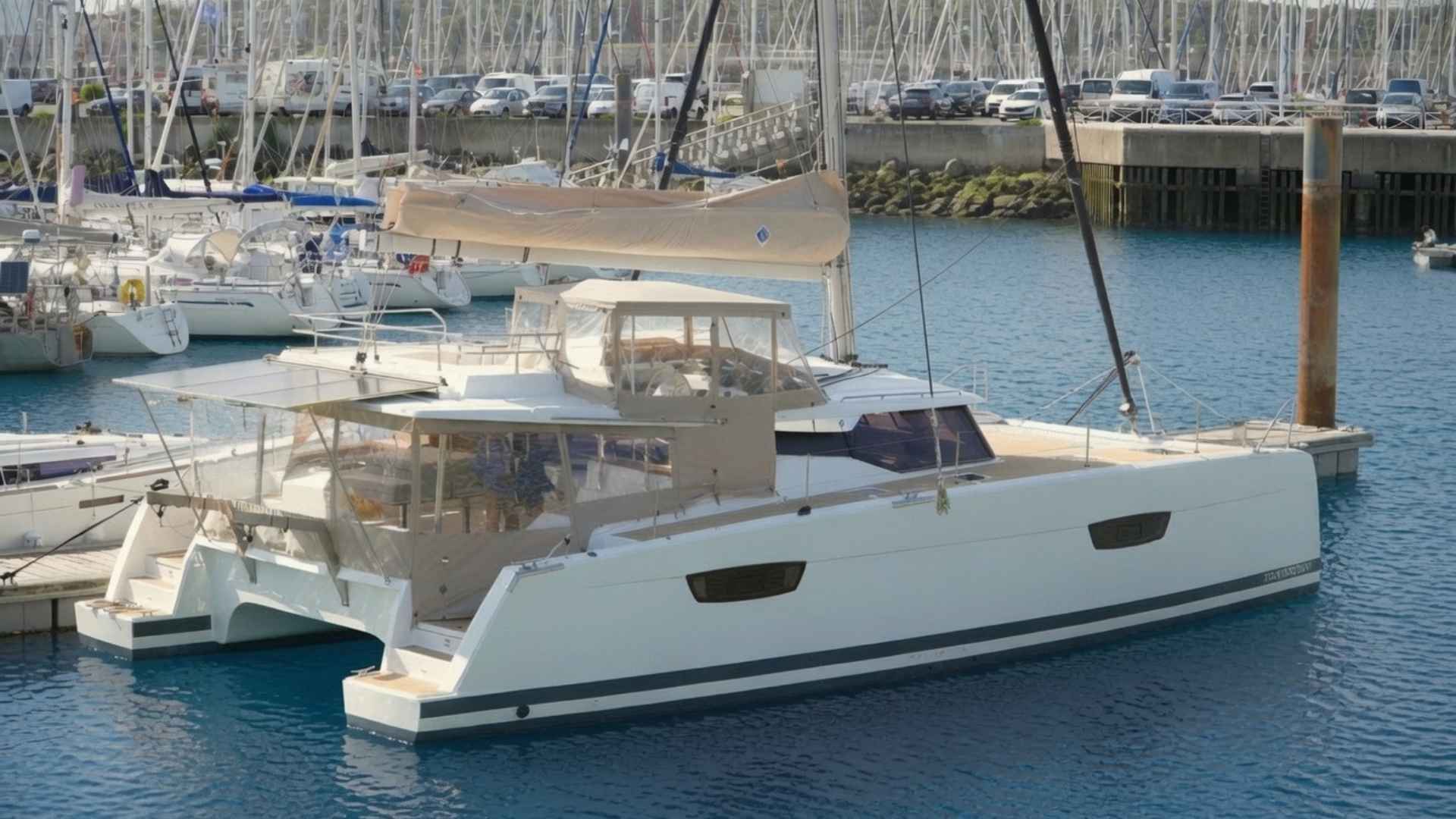
NEW Fountaine Pajot Tanna 47 for sale 2026
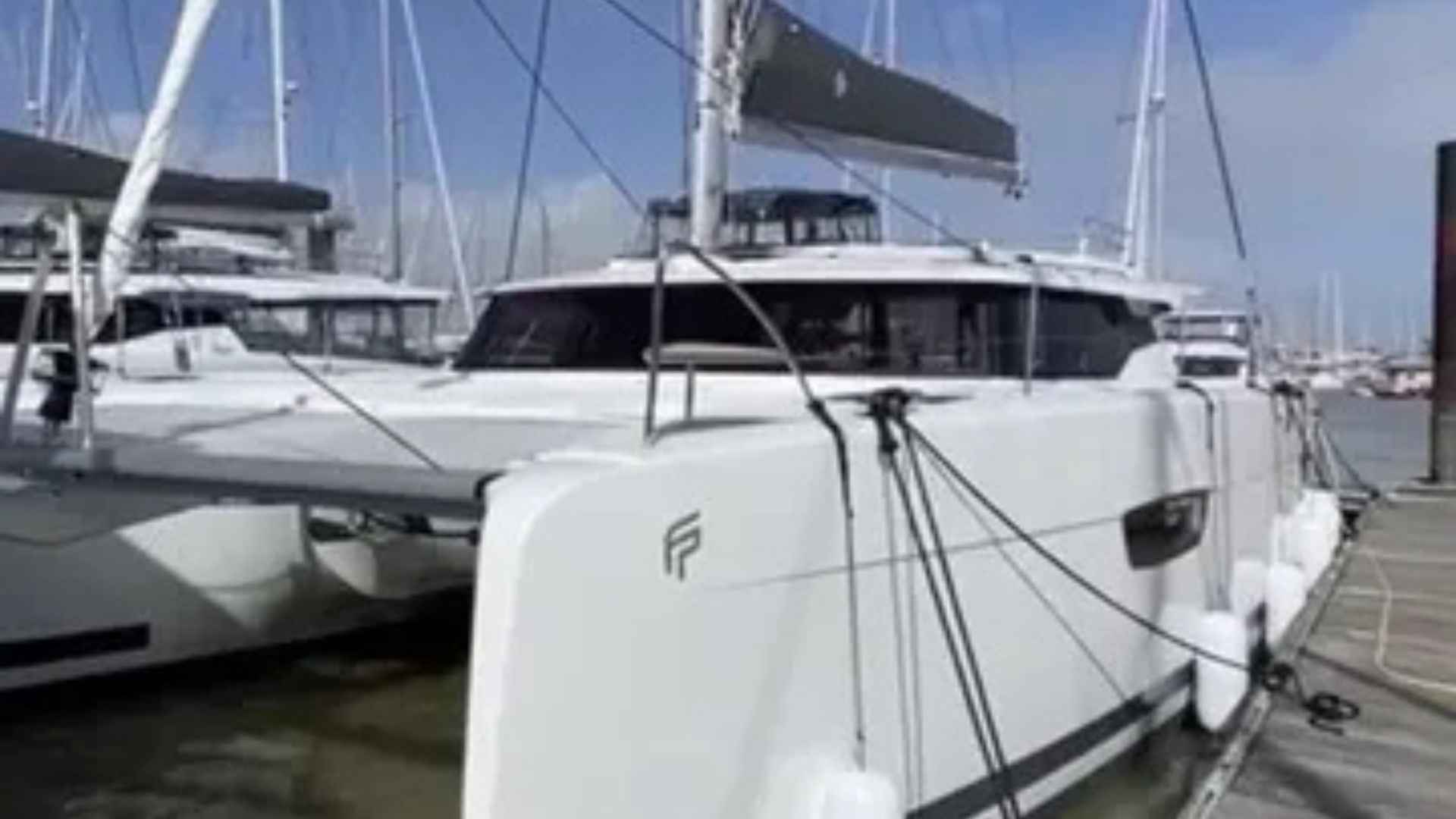
Fountaine Pajot Tanna 47 for Sale 2023
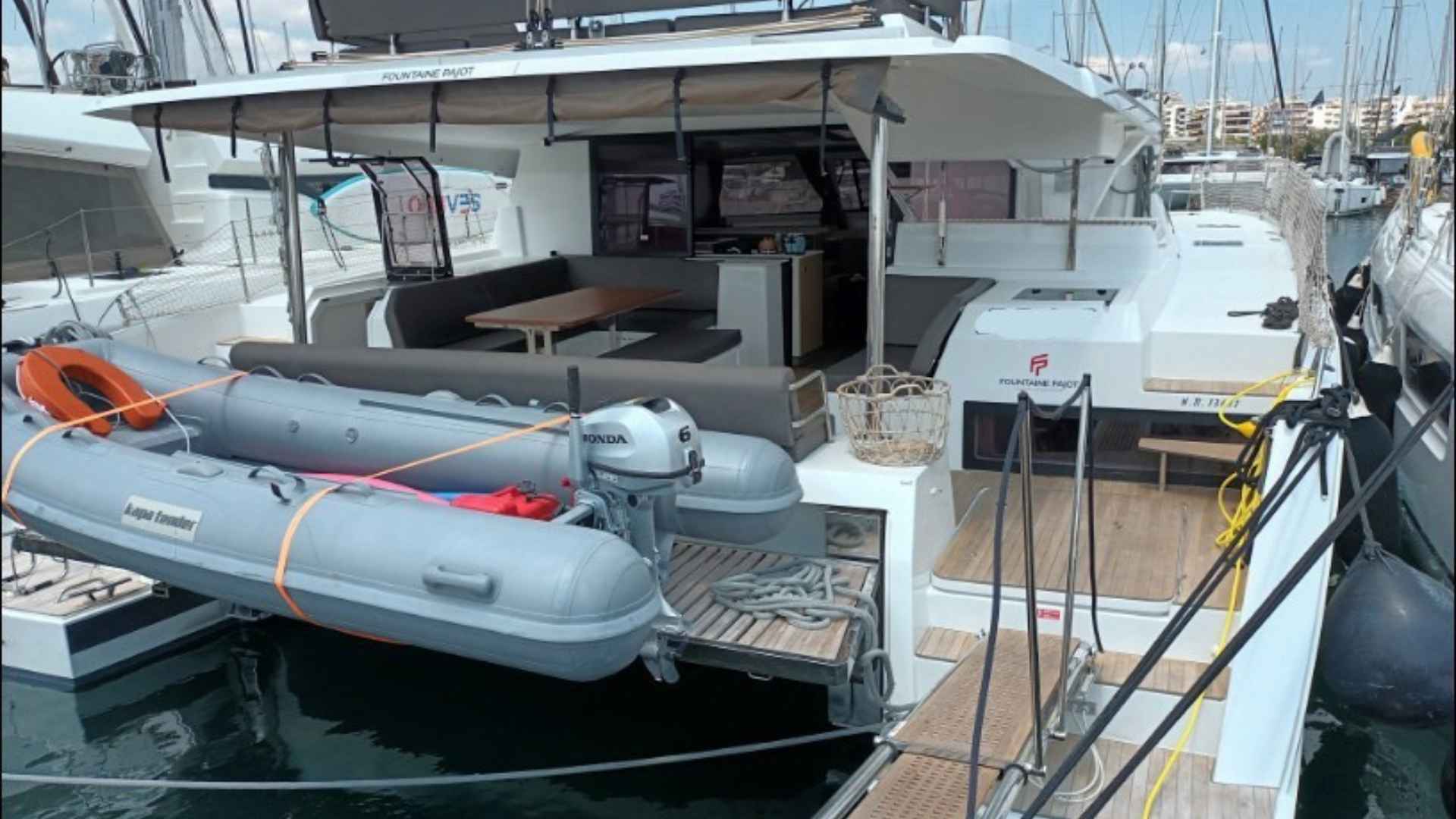
Fountaine Pajot Tanna 47 for sale 2024
What to inspect on a used Tanna 47.
Volvo saildrive condition
MS25L saildrives need diaphragm and seal replacement at 5–7 years. The earliest 2021 Tannas are now coming up to that service interval — €4,000–€7,000 per side.
Engine hours by use case
Charter Tanna 47s typically show 3,000–5,000 hours by year 4, owner-version typically 700–1,500 hours. Volvo D2-50/D2-60 service records should be complete with annual service, valve clearance, and impellers.
Flybridge weather damage
The expanded flybridge sees significant sun and salt exposure. Check for fading, soft spots, and waterproofing of the flybridge hatches. UV degradation on the fly-lounge cushions is common after 2–3 years.
Sail wardrobe
Charter-fleet Tannas often run heavily-used sails by year 3–4. Main and genoa replacement together is €15,000–€22,000. Code 0 (optional) condition worth verifying separately.
Saona-to-Tanna chain plate updates
Tanna 47 inherits some chain plate design from Saona 47. Inspect chain plate seals for water ingress at the bulkhead — known as a watching point on this generation of FP.
Saloon glazing seals
The expanded saloon glazing on the Tanna 47 needs careful inspection of perimeter seals for any UV breakdown or leakage. Replacement is €2,000–€4,000 per panel.
Tanna 47s for sale across the Mediterranean.
Models often compared with the Tanna 47.
Tanna 47 — frequently asked questions.
How much does a Tanna 47 cost?
Used Tanna 47 prices typically range from €520k for an early 2021 charter-version with high engine hours, up to €890k for a 2024 Maestro owner-version with full equipment. New builds start at approximately €820k for base specification, rising to €1.15M and above with the typical owner's equipment package. Charter-version Tannas trade 12–18% below Maestro equivalents.
Tanna 47 vs Saona 47 — what's the difference?
Same hull lineage (chined hulls), substantially different deck. The Tanna 47 features a flybridge lounge area roughly twice the size of the Saona's, an upgraded saloon with larger windows, and updated rig hardware. The Saona was produced from 2017–2021 and is widely available used; the Tanna replaced it in 2021 and is current production. For new buyers, the Tanna is the clear choice; for value, the Saona offers similar sailing characteristics at a meaningful discount.
How many cabins does the Tanna 47 have?
Four layouts: Maestro 3-cabin (owner suite), Maestro 4-cabin (owner suite + extra guest), Quintet 5-cabin, and Sextet 6-cabin (charter-focused, both hulls fully split with six heads).
Is the Tanna 47 good for charter?
Yes — the Sextet 6-cabin Tanna is dominant in current Mediterranean charter fleets in this size class. The flybridge-lounge layout has proven popular with charter guests, and the boat's economics work well for week-long charter operations.
Can the Tanna 47 cross the Atlantic?
Yes — the Tanna 47 is a capable bluewater catamaran. With 700 litres of fuel and 600 litres of water standard (most owners upgrade), and the proven Berret-Racoupeau chined hull design, it's well-suited to Atlantic and Caribbean cruising. Many private owners use it for ARC participation.
Tanna 47 vs Lagoon 46 — which is better?
Direct competitors with different priorities. Lagoon 46 emphasises interior volume and a polished finish; Tanna 47 emphasises sailing performance and the larger flybridge lounge. Lagoon 46 has a deeper parts and service network; Tanna 47 has the chined-hull performance edge. Used pricing is broadly comparable. Charter buyers tend to prefer the Lagoon 46 for fleet familiarity; owner-cruisers often prefer the Tanna 47 for sailing feel.
Ready to find your Tanna 47?
Browse the live inventory above, or talk directly to a vetted broker. No middlemen, no lead-generation pay-walls.