Lagoon 450 for sale.
The dominant catamaran in global charter fleets. A 45-foot cruising catamaran built from 2010 to 2019, with approximately 700-800 hulls produced. Available in 450 F (flybridge) and 450 S (sport top) variants. The highest-volume catamaran on the Mediterranean resale market — and the value play if you survey carefully.
The Lagoon 450 — charter fleet champion.
The Lagoon 450 entered production in 2010 as the replacement for the Lagoon 440 (2004-2013), with the two models overlapping in production for several years. Designed by VPLP — the firm responsible for the entire Lagoon range — the 450 was conceived around a brief that turned out to define the catamaran market for nearly a decade: maximum interior volume in a 45-foot package, simple and durable systems suited to charter operations, and a price point that scaled across both private and commercial fleets.
The result was the catamaran that came to dominate global charter operations. Roughly 700 to 800 hulls were built between 2010 and 2019, with the 450 F (flybridge) variant accounting for the bulk of charter-fleet sales. In 2017, Lagoon introduced the 450 S (sport top) as a lower-windage alternative aimed primarily at private owners. The 450 was succeeded by the Lagoon 46 in 2019.
For buyers today, the 450 is the highest-volume catamaran on the secondary market — at any given time, more 450s are listed for sale than any other single catamaran model. The implication is straightforward: the 450 is the value play in the 45-foot catamaran segment, but most 450s are ex-charter, which means survey priorities and remediation budgets matter more than they do for newer models. Buyers willing to do the work get genuine value; buyers expecting a turnkey boat are typically disappointed.
Lagoon 450 specs and dimensions.
Dimensions
- Length overall (LOA)
- 45'7" / 13.96 m
- Length waterline (LWL)
- 43'6" / 13.27 m
- Beam
- 25'10" / 7.87 m
- Draft
- 4'3" / 1.30 m
- Air draft (450 F)
- 74'6" / 22.70 m
- Air draft (450 S)
- 71'6" / 21.80 m
- Light displacement
- 33,069 lb / 15,000 kg
Sails & rig
- Mainsail
- 915 sq ft / 85 m²
- Genoa
- 506 sq ft / 47 m²
- Total sail area
- 1,421 sq ft / 132 m²
- Optional code 0
- 1,022 sq ft / 95 m²
- Optional gennaker
- 1,615 sq ft / 150 m²
Engines
- Standard engines
- 2 × Yanmar 4JH4-HTE (54 hp)
- Optional upgrade
- 2 × Yanmar 4JH80 (80 hp)
- Saildrives
- Yanmar SD60 / SD60-4
- Cruising speed
- 7.5 to 8.5 knots under power
- Max speed (engines)
- ~9.5 knots
Tankage & capacity
- Fuel
- 132 US gal / 500 L
- Fresh water
- 185 US gal / 700 L
- Holding tanks
- 2 × 21 US gal / 2 × 80 L
- Owner version berths
- 6 (3 cabins + saloon)
- Charter version berths
- 8 to 12 (4 cabins + saloon)
Specifications are manufacturer figures for a typical Lagoon 450. Dimensions vary slightly between 450 F and 450 S variants. Always verify against the specific boat's documentation during survey.
Lagoon 450 F vs Lagoon 450 S — which variant?
The 450 was produced in two distinct variants. Choosing between them is the second-most-important decision in a 450 purchase (after layout) and meaningfully affects sailing performance, windage, and price.
The original — charter dominant
Tall flybridge with helm station, sail handling, and a dedicated lounging area above the saloon roof. The 450 F was produced from 2010 to 2019 and is the dominant variant in charter fleets. Strengths: protected helm position, social cockpit-plus-flybridge layout, extra exterior living space. Weaknesses: 22.7m air draft (some marinas marginal), more windage at anchor, and slightly higher centre of gravity affecting sailing performance.
The owner's alternative
Introduced in 2017 with the helm moved to a starboard bulkhead position and a fixed sport top instead of a flybridge. The 450 S sacrifices the flybridge lounging space in exchange for lower air draft (21.8m), reduced windage at anchor, and modestly improved sailing performance. More common on private-owner inventory than in charter fleets. The 450 S typically trades at a 5 to 10 percent premium to a comparable 450 F on the resale market.
Lagoon 450 prices by year and condition.
Indicative 2026 ranges for the Lagoon 450 across year, layout, and variant. Country of sale also affects pricing — Italian and French inventory typically lists 5 to 15 percent above Spanish, Greek, or Croatian equivalents.
For deeper context on pricing, condition adjustments, and Lagoon resale dynamics, see our complete catamaran prices guide.
Lagoon 450s for sale right now.
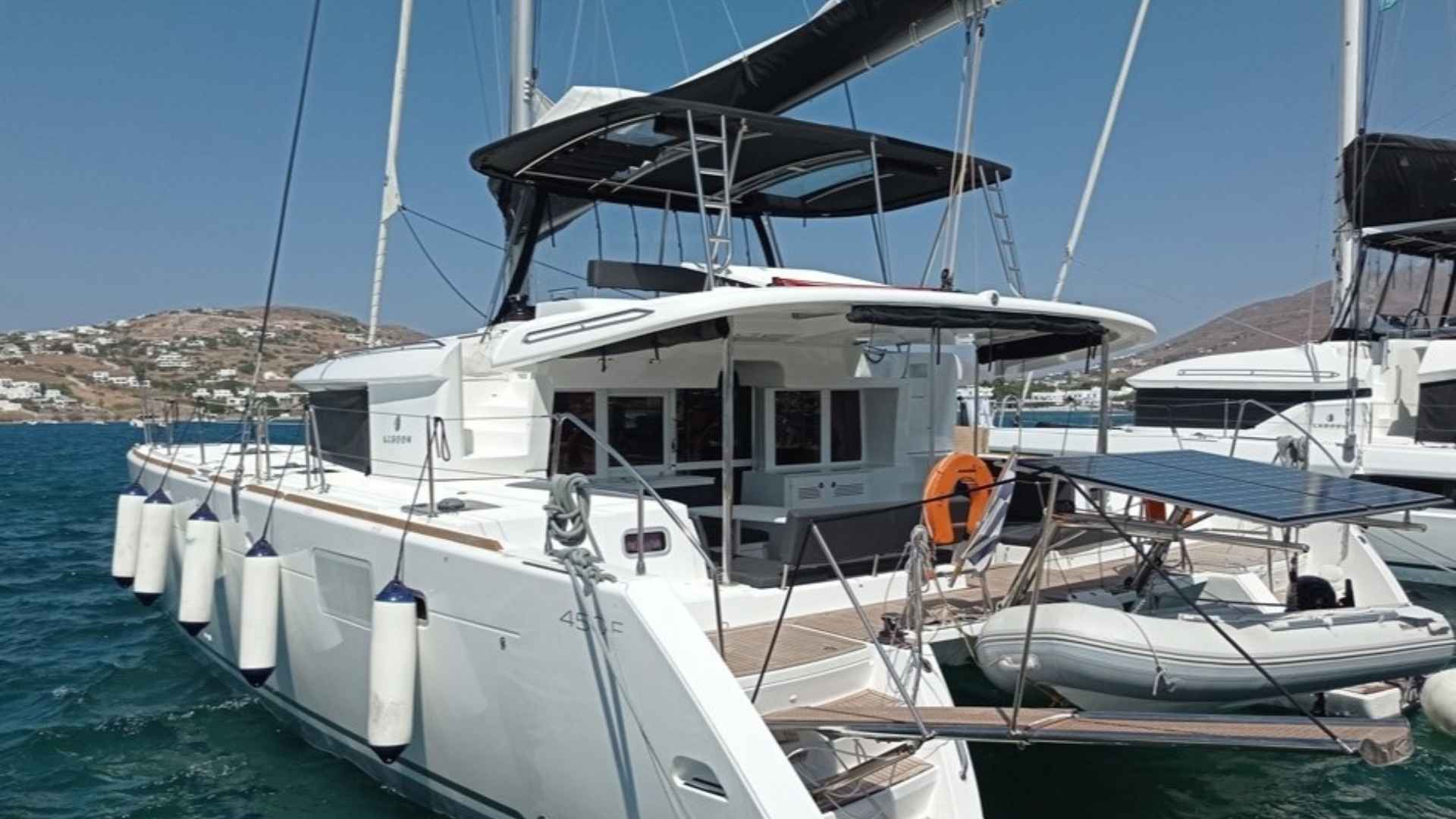
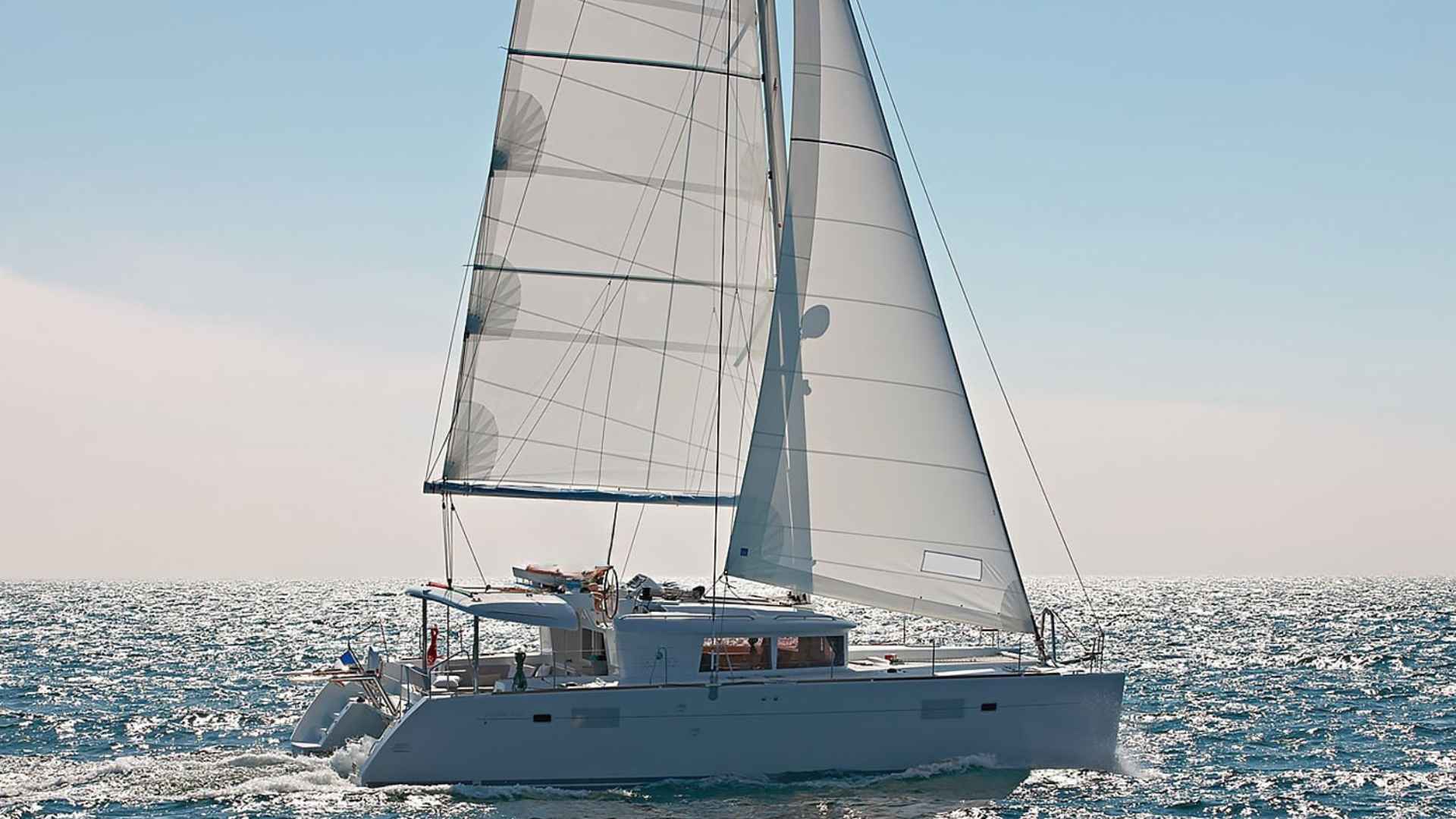
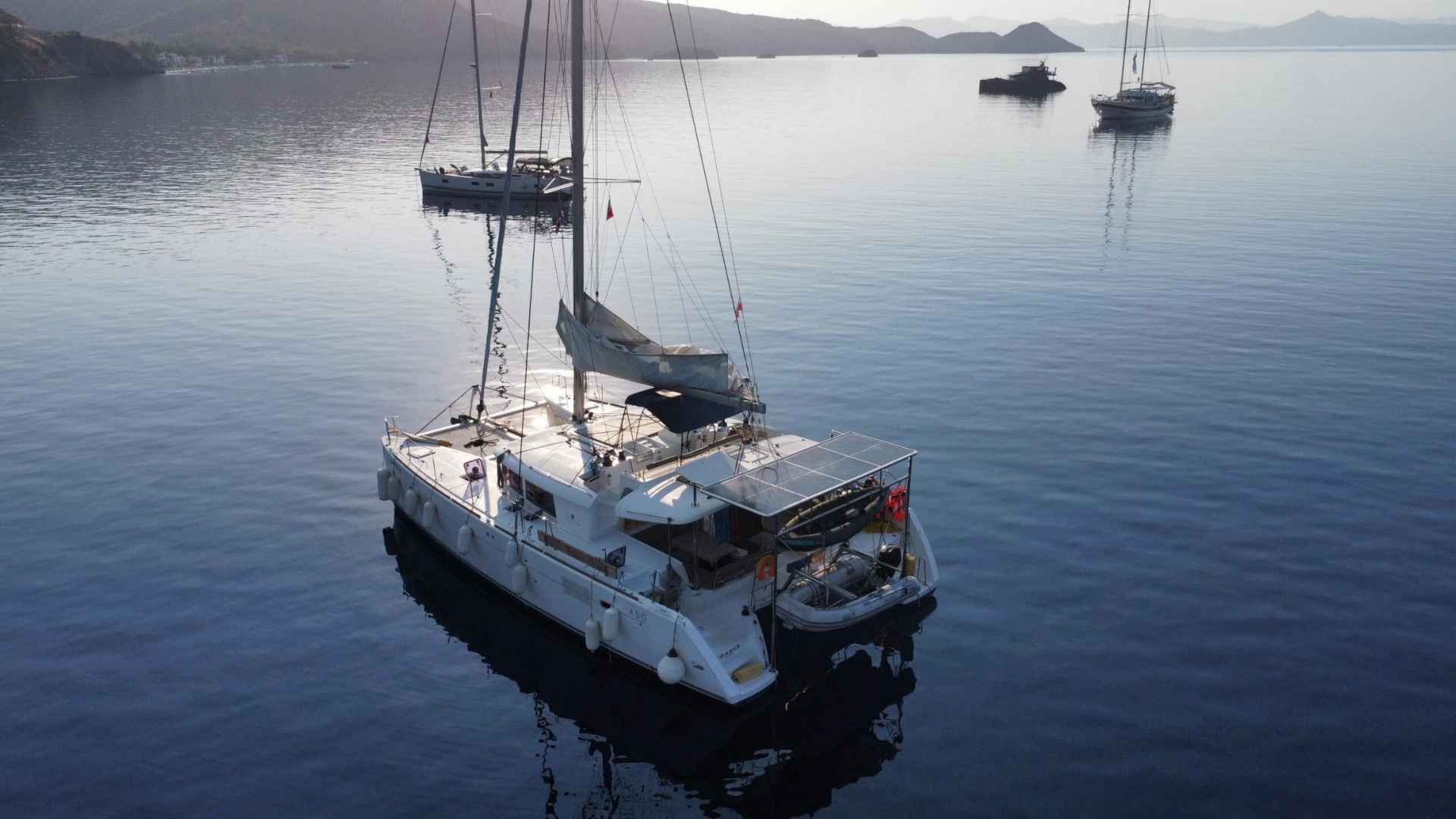
3 verified Lagoon 450s currently listed across the Mediterranean. Showing the 3 most recent.
What to inspect on a used Lagoon 450.
Engine hours and Yanmar service history
Charter-fleet 450s commonly show 5,000 to 8,000+ hours by 8 years of operation, owner-version typically 1,500 to 3,000 hours over the same period. Yanmar 4JH4-HTE engines are reliable but expensive to overhaul if neglected. Demand full Yanmar service records — oil and filters at 250-hour intervals, valve clearance at 1,000 hours, fuel injection inspection at 2,000 hours. Engines without records on a high-hour 450 are a €15,000 to €30,000 problem.
Saildrive seals (likely overdue)
Yanmar SD60 saildrives need seal and bellows replacement every 5 to 7 years. On any Lagoon 450 from 2010-2017 still on original saildrive seals, this is a near-certain €5,000 to €8,000 job per side. Inspect for any saltwater intrusion into gear oil — milky oil indicates a failed lower seal and immediate haul-out. Most 450s have had at least one seal replacement; verify when and by whom.
Sails, rigging, and chainplates
Charter-fleet 450s are often on second or third sail wardrobes by year 8. Standing rigging on 10+ year-old 450s deserves professional inspection — surface corrosion, swage condition, and chainplate seal integrity. Chainplate water intrusion into the deck core is a known issue on early 450s. New main and genoa together: €15,000 to €22,000. Full standing rigging replacement: €18,000 to €28,000.
Bridgedeck pounding damage
The Lagoon 450 has lower bridgedeck clearance than the newer Lagoon 46, which means extended rough-water passages can produce pounding damage to the underside of the saloon between the hulls. Look for any starring, stress cracks, or repaired sections. Atlantic-crossing 450s sometimes show this; Mediterranean-only boats rarely do. Significant bridgedeck damage is grounds to walk.
Electronics generation and house systems
Charter-fleet 450s typically have basic factory electronics that are now 8 to 14 years old — chartplotters, autopilot, and AIS may be functional but obsolete. Owner-version 450s often have mid-life upgrades. Air conditioning, watermakers, and generators on charter boats are heavily-used and frequently near end-of-life. Comprehensive electronics refresh: €10,000 to €25,000.
Cosmetic and interior wear
Charter-fleet 450 interiors show 8 to 14 years of guest turnover — upholstery, headliner, bulkheads, and galley surfaces all wear. Cosmetic refresh on an ex-charter 450 typically runs €15,000 to €40,000 depending on scope. This isn't safety-critical but it is a real cost to factor into the purchase budget. Many buyers underestimate cosmetic remediation; experienced buyers price it in upfront.
Generic catamaran survey priorities apply equally: see our full catamaran survey checklist. For the charter-vs-owner decision specifically, see our layout guide.
Lagoon 450s for sale across the Mediterranean.
Models often compared with the Lagoon 450.
Lagoon 450 — frequently asked questions.
How much does a Lagoon 450 cost?
Used Lagoon 450 prices typically range from €280k for an early 2010-2012 charter-version with high engine hours and deferred maintenance, up to €580k for a 2018-2019 owner-version with low hours and full equipment. The bulk of the market sits at €350k to €480k for 2014-2017 boats — overwhelmingly ex-charter, with the price varying based on charter intensity, equipment package, and country of sale.
What is the difference between Lagoon 450 F and Lagoon 450 S?
The Lagoon 450 F (flybridge) is the original variant introduced in 2010, with a tall flybridge incorporating the helm, sail handling, and a lounging area above the saloon roof. The Lagoon 450 S (sport top) was introduced in 2017 as a lower-profile alternative — the helm moves to a starboard bulkhead position with a fixed sport top instead of a flybridge, lowering air draft, reducing windage, and improving sailing performance modestly. The 450 F is the dominant variant in charter fleets; the 450 S is more common on private-owner inventory.
Is the Lagoon 450 a good catamaran?
The Lagoon 450 is widely regarded as a competent, comfortable, and durable cruising catamaran. Strengths include genuinely spacious accommodation for the length, well-developed deck layout, simple and reliable systems, and exceptional resale liquidity. Weaknesses include modest upwind sailing performance, a tall flybridge that creates significant windage on the 450 F variant, and the practical reality that most 450s are heavily charter-worn. With careful survey selection, the 450 remains an excellent choice for couples and families.
How many Lagoon 450s were built?
Lagoon does not publish official build numbers, but industry estimates put total Lagoon 450 production at approximately 700 to 800 hulls between 2010 and 2019. The 450 was Lagoon's volume seller for most of the 2010s, dominating the global catamaran charter fleet. The 450 F variant accounted for roughly 75 to 80 percent of total production; the 450 S for the remainder from 2017 onward. The 450 was succeeded by the Lagoon 46 in 2019.
Should I buy an ex-charter Lagoon 450?
Most Lagoon 450s on the resale market are ex-charter. The economics can be excellent — 30 to 45 percent below new prices — but the survey priorities shift heavily. Engine hours commonly exceed 4,000 (versus 1,000 to 1,500 for private-owner equivalents), saildrive seals are usually overdue, sails are often near end-of-life, and interior wear is significant. Budget €25k to €60k for post-purchase remediation. With proper survey and remediation budget, ex-charter 450s remain a viable buy.
Lagoon 450 vs Lagoon 46 — which should I buy?
The Lagoon 46 (2019-present) is the 450's direct successor. Both are 45 to 46-foot cruising catamarans with similar interior volumes and target buyers. The 46 has more modern systems, slightly better sailing performance, refined interior finish, and current production support. The 450 is older but cheaper — typical 5-year-old 450 lists at €380k to €480k versus €580k to €750k for an equivalent-aged 46. For buyers prioritising value and willing to invest in remediation, the 450 is the clear choice. For buyers wanting modern systems and lower charter exposure, the 46 is worth the premium.
Ready to find your Lagoon 450?
Browse the live inventory above, or talk directly to a vetted broker. No middlemen, no lead-generation pay-walls.