Lagoon 42 for sale.
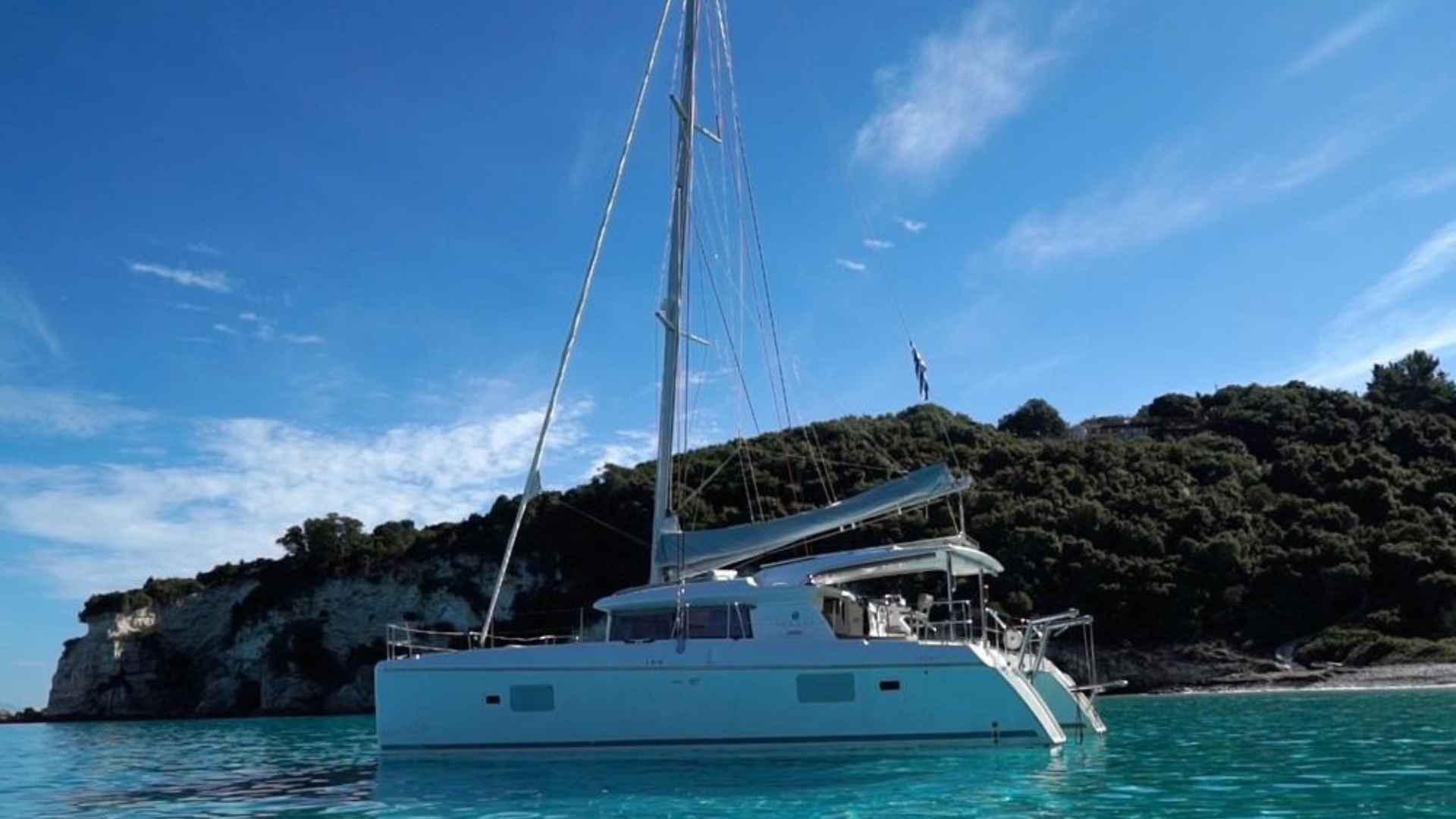
The most-listed Lagoon model on the Mediterranean resale market. A 42-foot cruising catamaran built since 2017, available in 3-cabin owner and 4-cabin charter layouts. The volume seller in Lagoon's 40-foot bracket and a sweet-spot couple-cruising catamaran.
The Lagoon 42 — Lagoon's sweet-spot cruiser.
The Lagoon 42 entered production in 2017 as the replacement for the Lagoon 420 (2006–2014) and the natural successor to the Lagoon 39 in Lagoon's 40-foot bracket. Designed by VPLP (the firm behind the entire Lagoon range) with interior styling by Nauta Design and Patrick le Quément, the 42 was built around a brief that proved unusually successful: shorter waterline than the outgoing 420 but more interior volume, modern flybridge layout, and a price point that positioned it as Lagoon's volume seller for couples and small families.
The result is a catamaran that's become the most-listed Lagoon model on the global resale market. Lagoon hasn't published official build numbers, but industry estimates put production at 350+ hulls through 2024 — substantial for a 7-year-old model. The 42 is the boat that most catamaran shoppers in the 40-foot bracket actually compare other boats against.
For buyers, the 42's strengths are: liveable accommodation for couples and small families, genuine short-handed friendly sail handling, strong resale liquidity (it sells faster than almost any other catamaran in the 40-foot bracket), and a well-developed parts and service network across the Mediterranean. The trade-offs are: modest sailing performance (the 42 is conservative even by Lagoon standards), significant charter exposure on the resale market, and tight tankage standard (300 litres fresh water is marginal for extended cruising and most owners upgrade).
Lagoon 42 specs and dimensions.
Dimensions
- Length overall (LOA)
- 42'2" / 12.84 m
- Length waterline (LWL)
- 40'9" / 12.42 m
- Beam
- 24'5" / 7.45 m
- Draft
- 4'3" / 1.30 m
- Air draft (mast top)
- 67'7" / 20.60 m
- Light displacement
- 27,558 lb / 12,500 kg
Sails & rig
- Mainsail
- 786 sq ft / 73 m²
- Genoa
- 506 sq ft / 47 m²
- Total sail area
- 1,292 sq ft / 120 m²
- Optional code 0
- 915 sq ft / 85 m²
- Optional gennaker
- 1,400 sq ft / 130 m²
Engines
- Standard engines
- 2 × Yanmar 4JH45 (45 hp)
- Optional upgrade
- 2 × Yanmar 4JH57 (57 hp)
- Saildrives
- Yanmar SD60 / SD65
- Cruising speed
- 7 to 8 knots under power
- Max speed (engines)
- ~9 knots
Tankage & capacity
- Fuel
- 124 US gal / 470 L
- Fresh water
- 79 US gal / 300 L
- Holding tanks
- 2 × 21 US gal / 2 × 80 L
- Owner version berths
- 6 (3 cabins + saloon)
- Charter version berths
- 8 to 12 (4 cabins + saloon)
Specifications are manufacturer figures for a base specification Lagoon 42. Individual boats vary based on year, equipment, and owner modifications. Always verify against the specific boat's documentation during survey.
Owner version vs charter version — which Lagoon 42?
The Lagoon 42 is offered in two distinct layouts. Choosing between them is the most important decision in a 42 purchase, and meaningfully affects price, resale, and how the boat actually lives.
For couples and small families
The starboard hull is dedicated to a single owner suite with island king-size berth, large head with separate shower, walk-in storage, and a dedicated workspace. The port hull contains two guest cabins with a shared head. Total of 3 cabins, 2 heads. Best for couples cruising with occasional guests, liveaboards, and any owner who doesn't need maximum sleeping capacity. Trades at a 12 to 18 percent premium to charter version.
For maximum capacity
Both hulls split symmetrically into two cabins each, with four heads (one per cabin). Total of 4 cabins, 4 heads. Sleeps up to 8 guests plus crew in saloon. Designed for charter operations, family use with multiple children, or owners who frequently host guests. Lower per-cabin price but reduced storage and no single "master" suite. The dominant layout in charter fleets and on the resale market.
Wider context on layout choice and resale implications: our charter version vs owner version guide.
Lagoon 42 prices used and new in 2026.
Indicative 2026 ranges for the Lagoon 42 across condition, year, and layout. Country of sale also affects pricing — Italian and French inventory typically lists 5 to 15 percent above Spanish or Greek equivalents.
For deeper context on Lagoon pricing, condition adjustments, and country-of-sale variation, see our complete catamaran prices guide.
See the Lagoon 42 on board.
Walkthrough video courtesy of The Multihull Company on YouTube. Watch on YouTube →
Lagoon 42s for sale right now.
5 verified Lagoon 42s currently listed across the Mediterranean. Showing the 5 most recent.
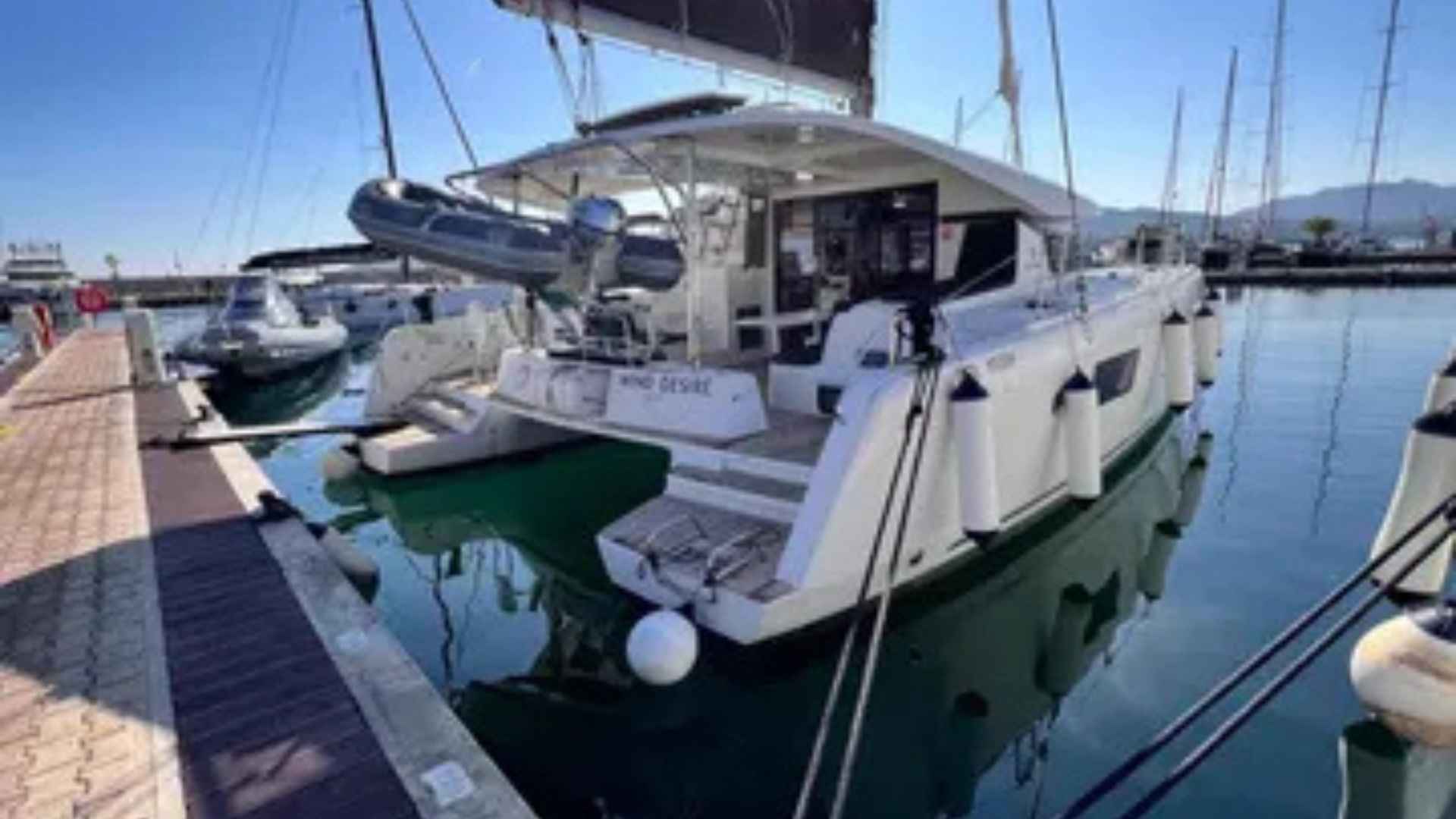
Lagoon 42 for sale 2018
Lagoon 42 for sale 2024
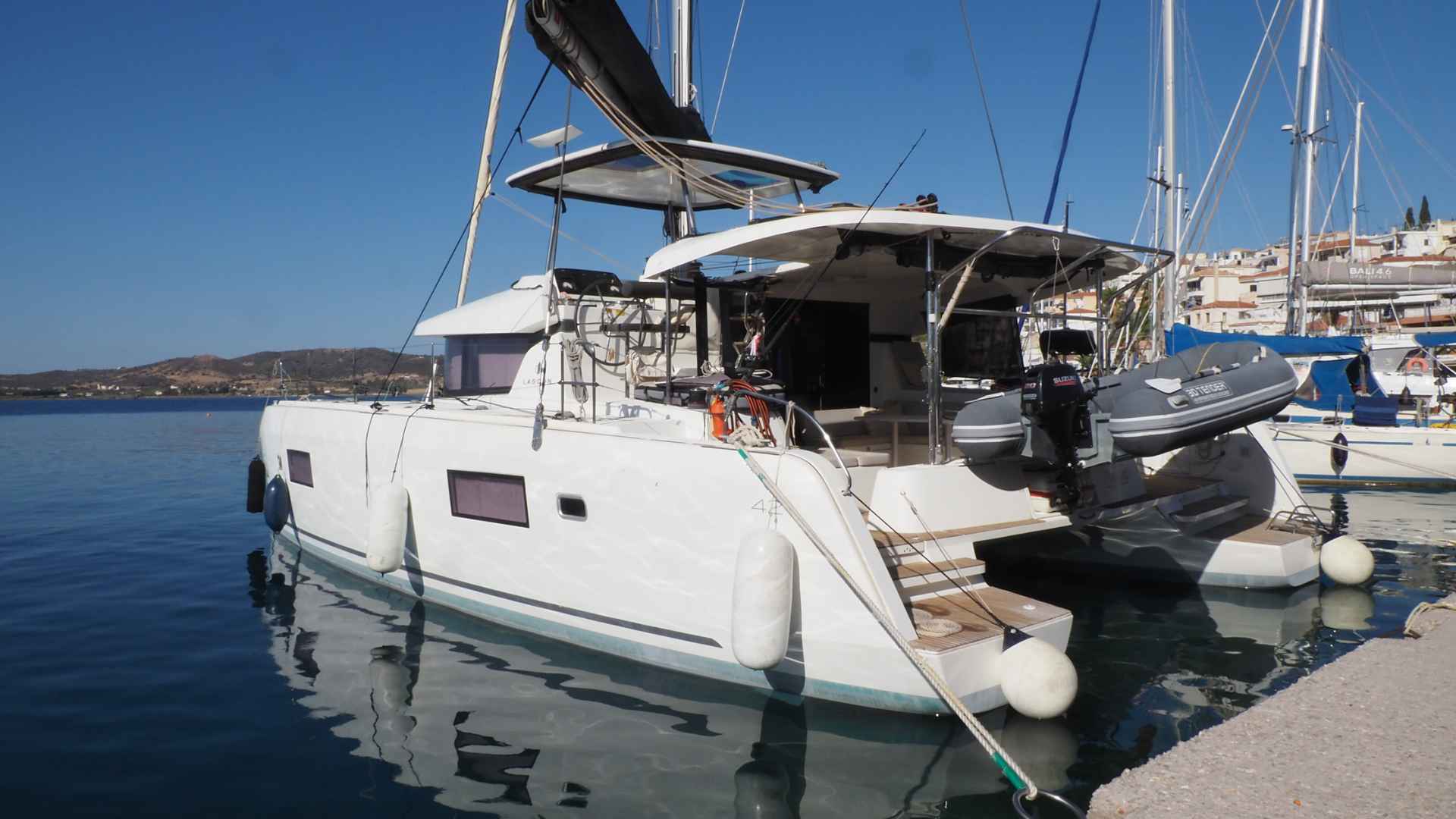
Lagoon 42 for sale 2020
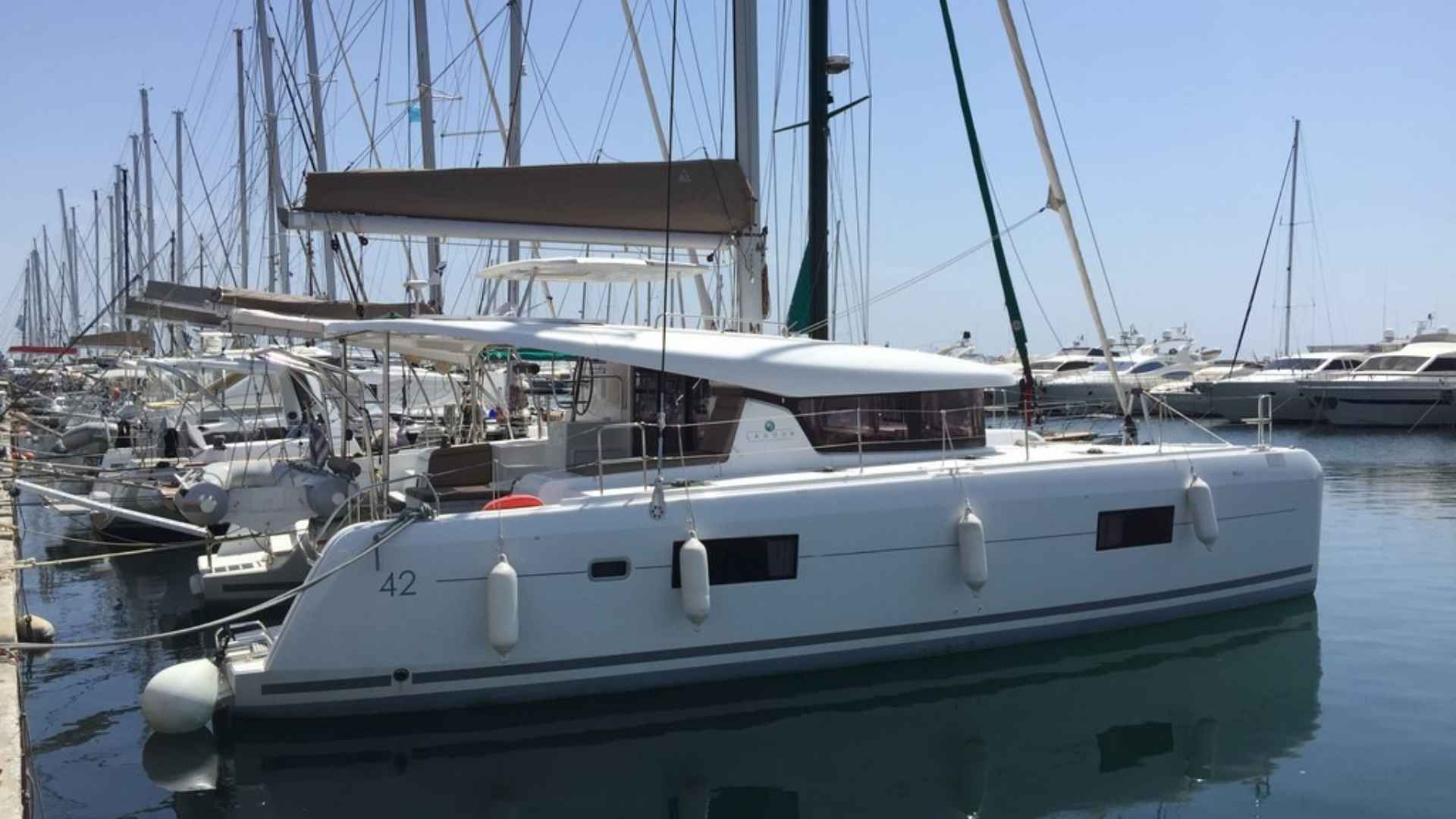
Lagoon 42 for sale 2017
Lagoon 421 for sale 2010
What to inspect on a used Lagoon 42.
Saildrive seals and bellows
Yanmar SD60/SD65 saildrives need seal and bellows replacement every 5 to 7 years. On any Lagoon 42 from 2017–2018 still on original seals, this is a near-certain €4,000 to €7,000 job. Always check the saildrive service history and inspect for any signs of saltwater intrusion into the gear oil.
Engine hours and service history
Charter-version 42s commonly show 3,500 to 5,500 hours by year 5, owner-version typically 800 to 1,800 hours over the same period. Demand full Yanmar service records — oil and filter intervals (250 hours), valve clearance checks (1,000 hours), and impeller replacements. Missing service history is a price negotiation lever of €5,000 to €10,000.
Sail condition and rig age
Charter-fleet 42s often show heavily-used sails by year 4 to 5 — main and genoa replacement together runs €12,000 to €18,000. Standing rigging on Lagoon 42s is generally robust but should be inspected at 10 years for surface corrosion, swage condition, and chainplate seal integrity.
Bridgedeck and hull crown
Look for any signs of grounding damage, particularly on the bridgedeck (the underside of the saloon between the hulls) and the keel sumps. Lagoon 42s have a relatively low bridgedeck clearance — pounding damage from rough-water passages is uncommon but worth checking. Any starring or stress cracks deserve professional structural assessment.
Electronics and house systems
Charter boats often have basic electronics packages (B&G or Raymarine entry-level). Owner-version boats typically have upgraded chartplotters, AIS, radar, and sometimes satellite communications. Test every system live during sea trial — a non-functional autopilot or chartplotter on charter inventory is common and a meaningful negotiation point.
Tankage upgrades
Standard fresh water tankage of 300 litres is widely considered marginal for cruising. Many private-owner 42s have been upgraded with auxiliary tankage (typically adding 200 to 300 litres) or a watermaker. Verify whether upgrades are present, properly installed, and properly documented. A factory-style watermaker installation is worth €8,000 to €15,000 in resale value.
Generic catamaran survey priorities apply equally: see our full catamaran survey checklist.
Lagoon 42s for sale across the Mediterranean.
Models often compared with the Lagoon 42.
Lagoon 42 — frequently asked questions.
How much does a Lagoon 42 cost?
Used Lagoon 42 prices typically range from €320k for an early 2017 charter-version with high engine hours, up to €580k for a recent owner-version with low hours and full equipment. New Lagoon 42s start at approximately €580k for base specification, rising to €750k and above with the typical equipment package. Charter-version 42s typically trade 12 to 18 percent below owner-version equivalents.
How many cabins does the Lagoon 42 have?
The Lagoon 42 is offered in two layouts. The 3-cabin owner version dedicates the entire starboard hull to a single owner suite with king-size berth, walk-in storage, large head with separate shower, and dedicated workspace. The 4-cabin charter version splits both hulls into two cabins each, with four heads, designed for charter guest capacity of up to 8 guests plus crew. The owner version sells for a 12 to 18 percent premium on the resale market.
Is the Lagoon 42 good for couples?
Yes — the Lagoon 42 is widely considered one of the best couple-cruising catamarans in production. The owner-version layout provides a genuinely spacious owner suite, the 42-foot length is short-handed friendly for two-person sailing and docking, fuel and maintenance costs are manageable for a couple, and the boat has the volume for extended cruising and Atlantic passages.
What engines does the Lagoon 42 have?
The standard Lagoon 42 engine package is twin Yanmar 4JH45 saildrive engines at 45 horsepower each, totalling 90 horsepower. An optional upgrade to twin Yanmar 4JH57 engines at 57 horsepower is available for owners prioritising motoring performance. Both options use Yanmar SD60 or SD65 saildrives. Engine service intervals are typically 250 hours for oil and filters, 1,000 hours for major service. Saildrive seal replacement every 5 to 7 years.
Can the Lagoon 42 cross the Atlantic?
Yes — the Lagoon 42 is regularly used for Atlantic crossings, and is one of the most popular catamarans in the ARC. At 42 feet, with adequate tankage, good sail wardrobe, and modern electronics, the 42 is a competent ocean-cruising catamaran. Typical Atlantic crossing times are 18 to 24 days, comfortable rather than thrilling. For high-latitude or Pacific cruising, performance-oriented brands like Catana or Outremer are better suited.
Lagoon 42 vs Lagoon 450 — which is better?
Different generations targeting different buyers. The Lagoon 450 (2010–2019) is older, slightly larger at 45 feet, and dominated the charter market — most 450s on the resale market are ex-charter. The Lagoon 42 (2017–present) is newer, slightly smaller, and shows a higher proportion of private-owner inventory on resale. For couples wanting modern systems and lower charter exposure, the 42 is usually the better choice. For families wanting more interior volume and lower per-foot pricing, the 450 wins.
Ready to find your Lagoon 42?
Browse the live inventory above, or talk directly to a vetted broker. No middlemen, no lead-generation pay-walls.